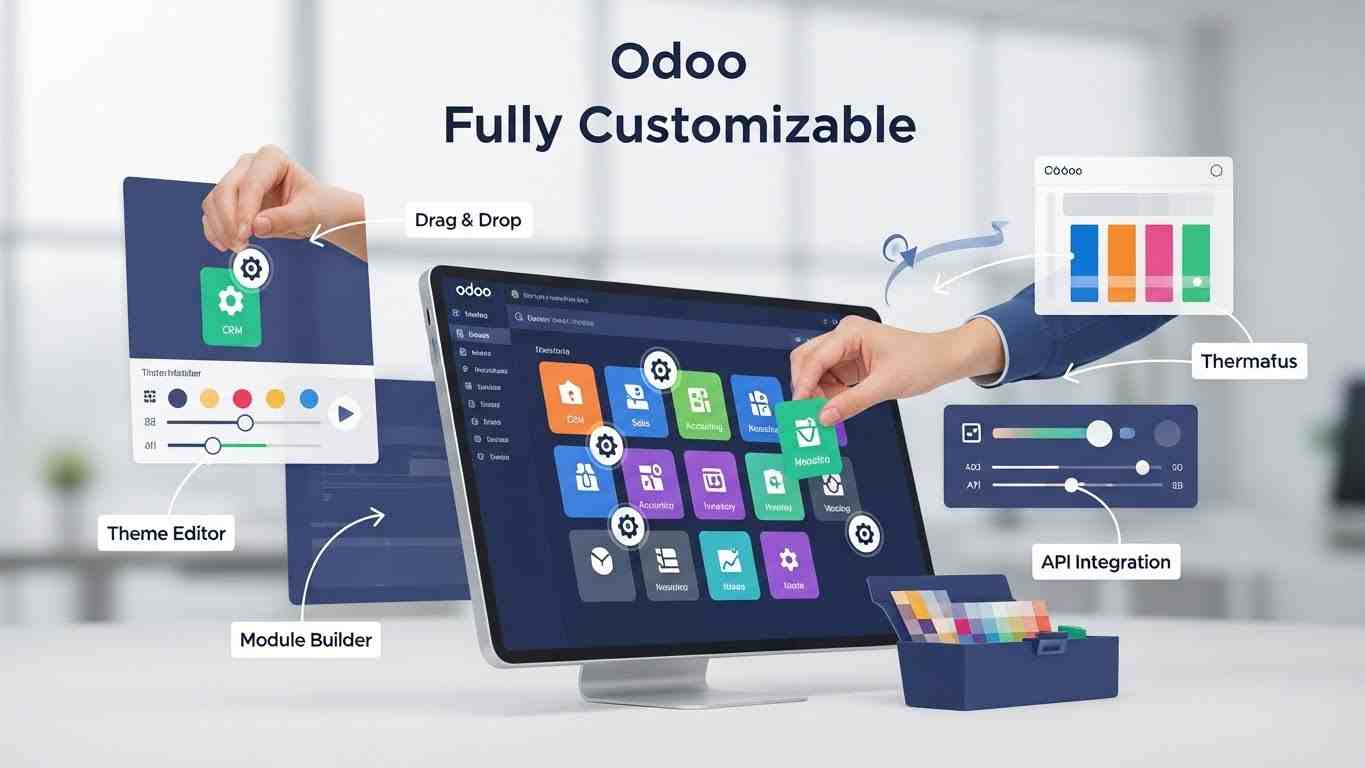
Every business operates in its own way. Some need multi-step approval flows, some rely on complex inventory rules, and others manage industry-specific compliance requirements. When a company chooses an ERP system like Odoo, the goal is to simplify these processes, not force the business to change just to fit the software.
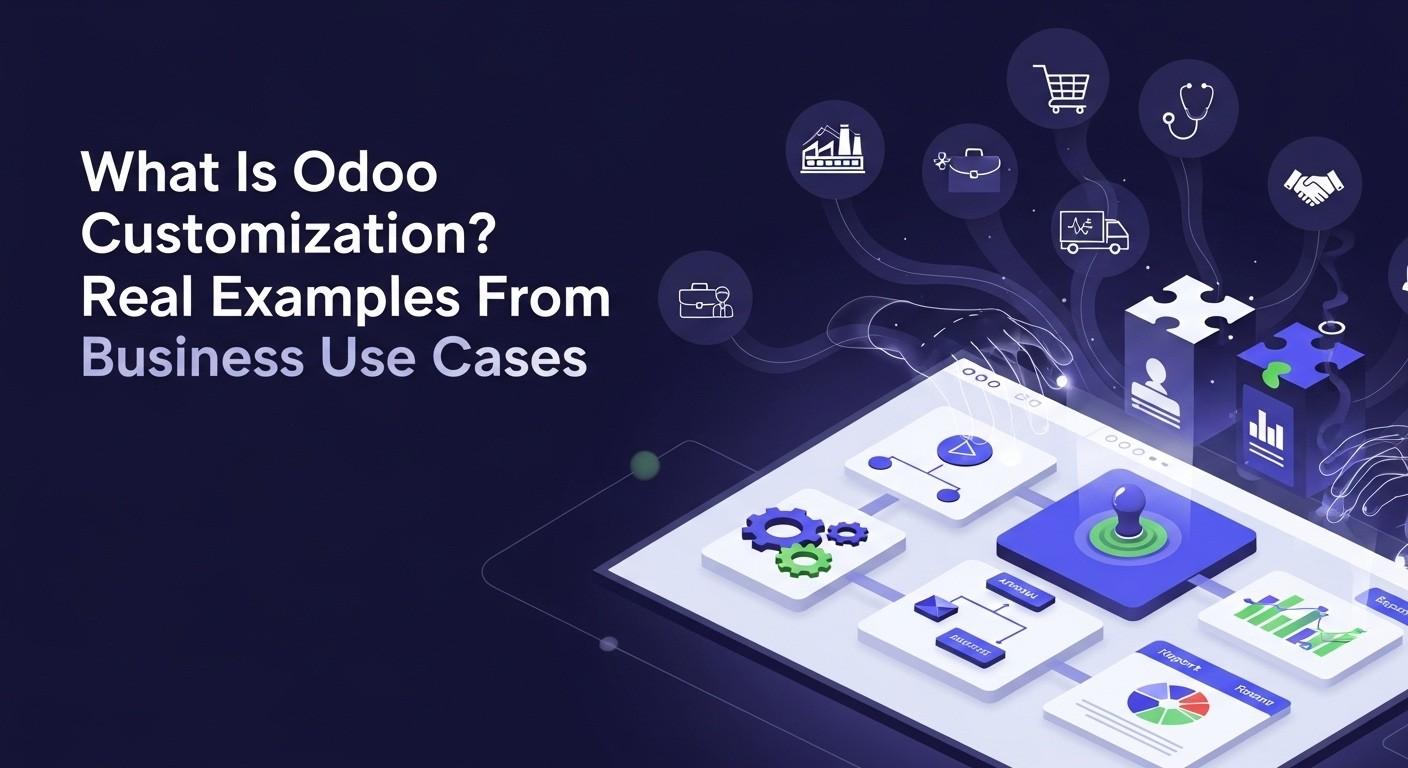
This is where Odoo customization becomes important. Odoo is built to be flexible, modular, and open for extension. Instead of working “around” the system, companies can shape the ERP to match how they already work. Customization turns Odoo from a standard platform into a tailored engine that fits a business’s daily operations, culture, and long-term strategy.
This article explains what Odoo customization means, why companies need it, how it’s done safely, and what benefits or risks come with it. The goal is to give business owners, managers, and ERP beginners a clear and understandable explanation without technical jargon.
What Odoo Customization Really Means
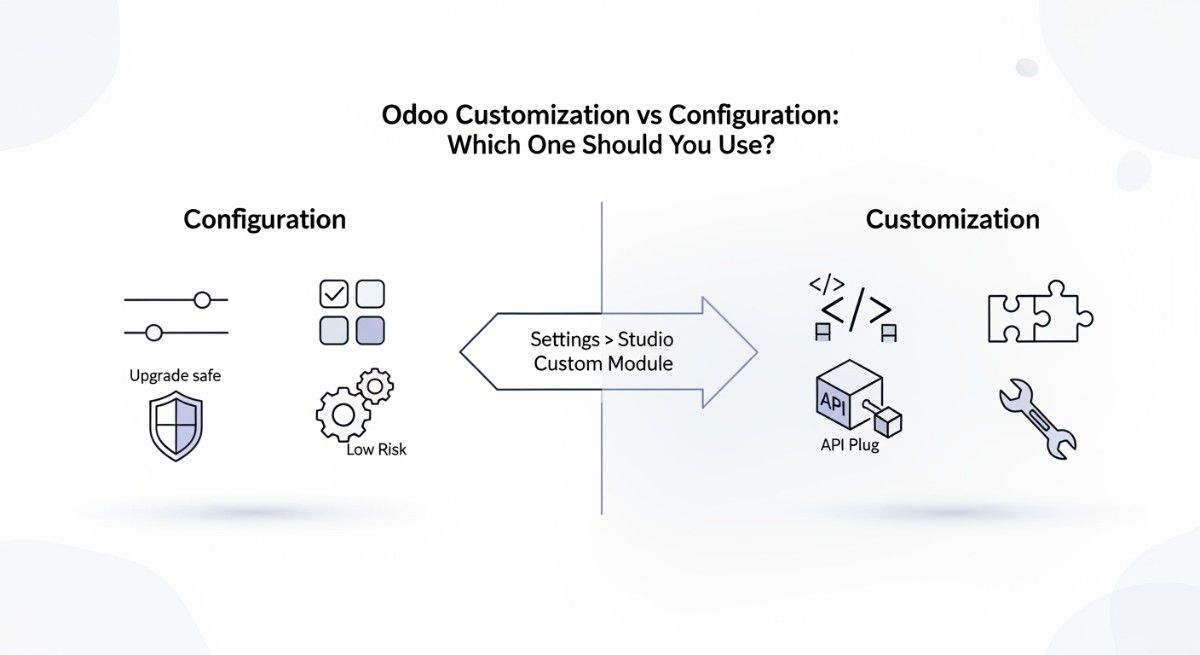
Customization simply means changing or extending Odoo beyond its standard configuration options. Odoo already provides many settings—tax rules, access rights, automated actions, workflows, and more. These are called configurations, and they help most businesses get started quickly.
But configuration has limits. When a company needs something Odoo doesn’t offer out of the box, customization steps in.
Customization can include:
- Adding new fields or forms
- Building entirely new modules
- Changing or extending workflows
- Creating custom dashboards or reports
- Integrating Odoo with external systems
- Changing the interface to match business needs
- Automating unique business processes
Customization is powerful because it adapts the software to business needs, not the other way around.
Why Companies Need Odoo Customization
Every ERP buyer starts with the same expectation: “I want one system that fits my business.” But no ERP can provide every specialized feature for every industry in the world. That’s why Odoo’s design is modular, flexible, and extendable.
Here are the most common reasons companies customize Odoo:
1. Unique Business Processes
Even two companies in the same industry rarely do things the same way. A simple example:
- One company requires 5 approval levels before a purchase is confirmed.
- Another requires none.
- A third requires approvals only if the amount is above a limit.
These nuances require customization.
2. Industry-Specific Compliance
Healthcare, finance, manufacturing, retail, and logistics all have regulations that standard modules can’t always handle.
Examples:
- Audit trails
- Restricted access rules
- Additional reporting
- Validation checks
- Document traceability
Customization helps businesses meet compliance without manual workarounds.
3. Advanced Reporting and KPIs
Managers need information in a certain way. Standard Odoo reports are helpful, but many companies need:
- Custom dashboards
- Consolidated KPI views
- Sector-specific metrics
These require custom logic.
4. Integration With Third-Party Systems
Businesses commonly use additional tools:
- E-commerce platforms
- Accounting or payroll systems
- Barcode systems
- Shipping carriers
- Marketing platforms
Custom integrations prevent double data entry and keep everything in sync.
5. Improved User Experience
A small interface adjustment, like moving a field, hiding irrelevant options, or adding new shortcuts, can dramatically improve user adoption.
Methods of Customizing Odoo
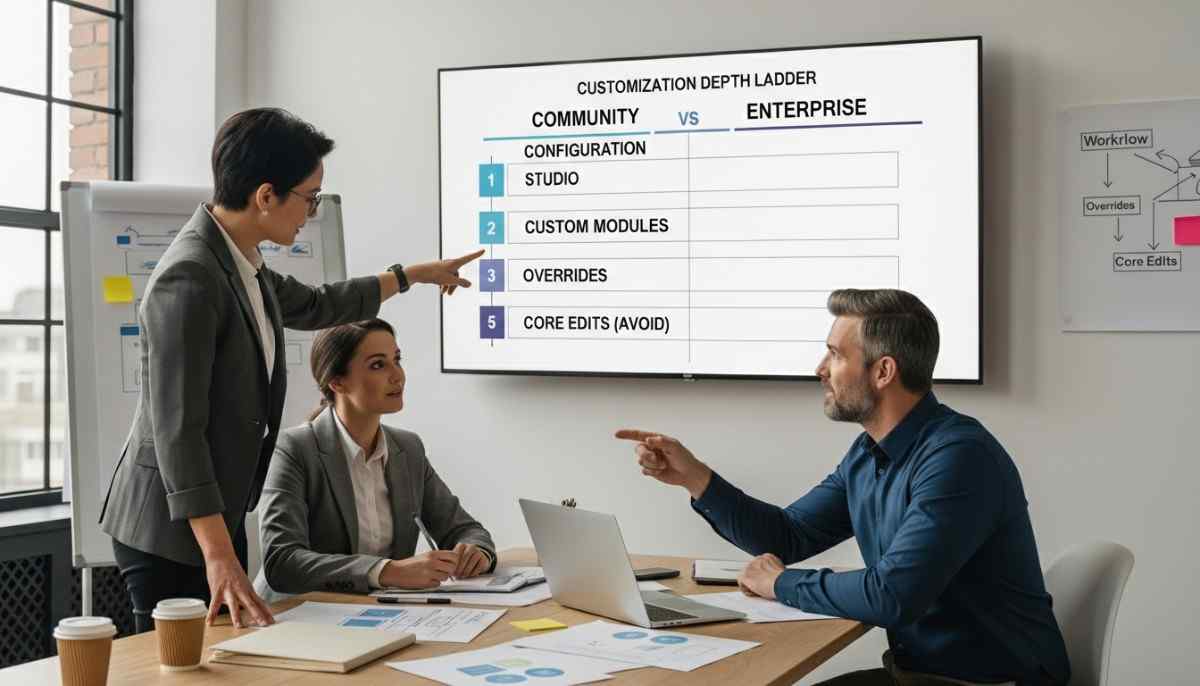
Odoo offers two clear paths for customization depending on the complexity of the requirement.
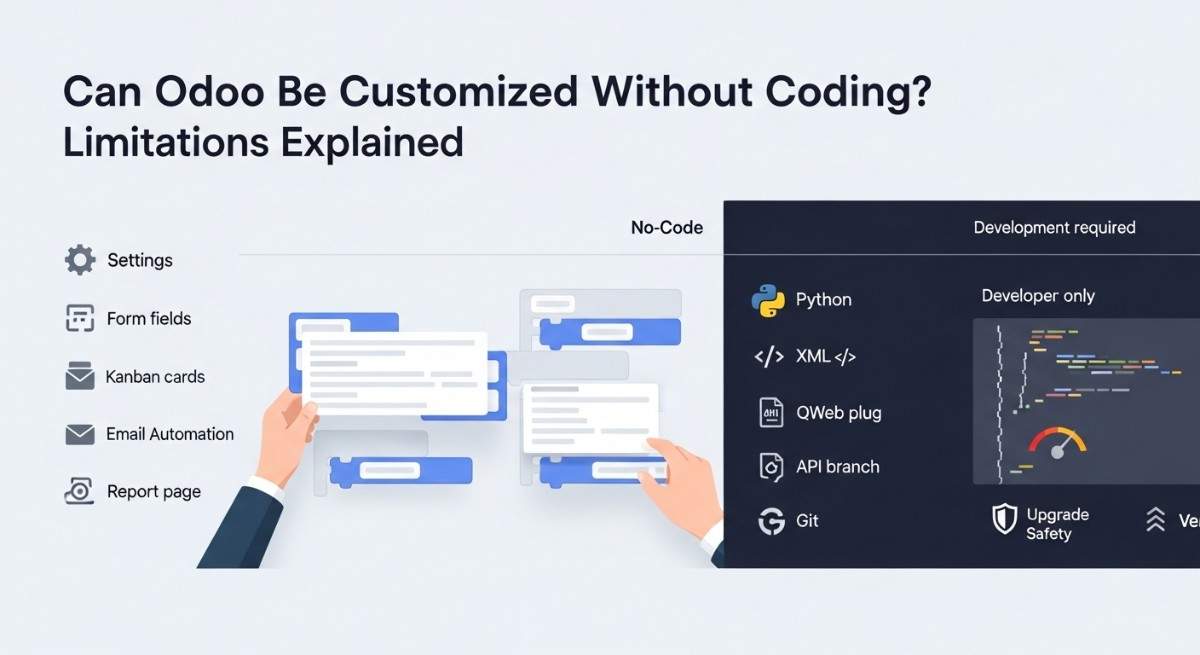
1. Using Odoo Studio (No-Code Customization)
Odoo Studio is a built-in tool that lets users modify Odoo without writing code. It works through drag-and-drop components and allows non-technical users to:
- Create new fields
- Modify forms and list views
- Add automation rules
- Build basic reports
- Create new simple models
This is ideal for small improvements or quick prototypes.
However, because Studio adds underlying technical elements, businesses should ensure they understand the long-term implications, especially regarding upgrades and subscription plan changes.
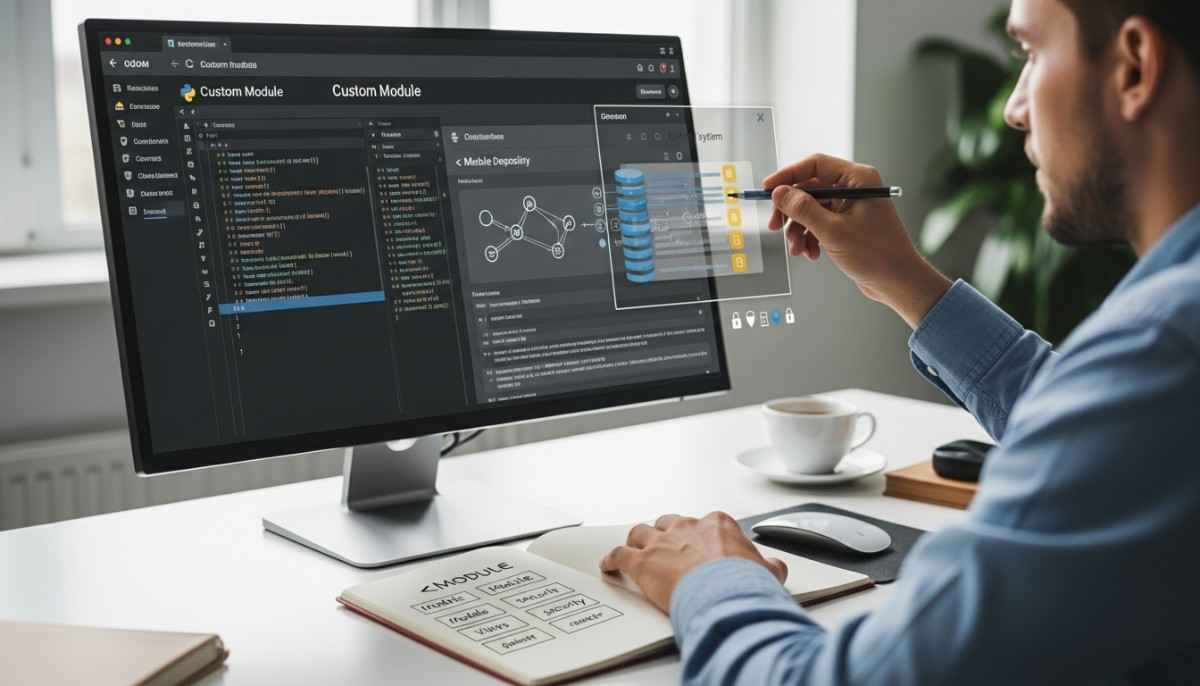
2. Code-Based Custom Modules
For deeper changes, developers build custom modules. These modules extend Odoo in a controlled, maintainable way. Good development follows Odoo’s guidelines:
- Use inheritance instead of modifying core files
- Keep modules modular and independent
- Write clear documentation
- Follow naming and coding standards
- Ensure strong access control rules
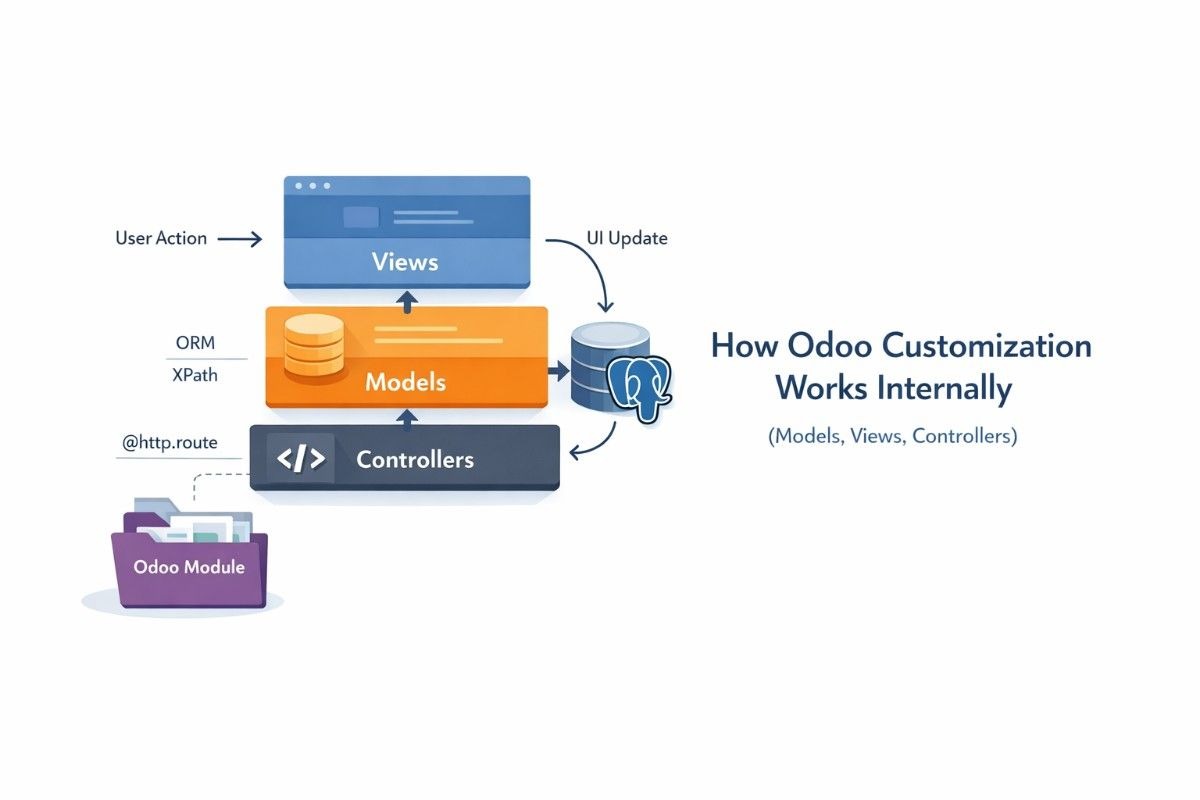
Custom modules can change almost anything:
- Business logic
- Data models
- Views
- Controllers
- Automated workflows
- API integrations
This method is powerful, but it requires expertise and structured project management.
Benefits of Customizing Odoo
When customization is done correctly, it becomes one of the strongest advantages of adopting Odoo. Here are the most important benefits.
1. A System Tailored to Your Business
When processes match the way employees work, efficiency naturally increases. Instead of forcing people to learn a new workflow, the software adapts to your existing processes.
This leads to:
- Fewer mistakes
- Higher productivity
- Reduced training time
- Better user comfort
2. Automation of Manual Work
Every business has repetitive tasks: generating documents, updating records, assigning tasks, sending notifications, validating data, and more.
Custom rules and workflows automate these steps so employees can focus on higher-value work.
3. Stronger Decision-Making Through Custom Reports
Decision-makers often rely on unique KPIs that aren’t available in standard modules. Custom dashboards and reports provide clear views of performance, helping leaders react faster and plan more accurately.
4. Seamless Integrations
Customizing Odoo to communicate with external systems creates a centralized ecosystem. This leads to:
- Real-time data updates
- Accurate stock tracking
- Unified customer records
- Faster order handling
5. Long-Term Scalability
As businesses grow, they need systems that grow with them. Customizations allow companies to extend workflows gradually without needing to rebuild the entire system.
Risks of Odoo Customization
While customization has major benefits, it must be handled properly to avoid long-term issues.
1. Upgrade Difficulties
Odoo releases new versions every year. If customization is not done correctly, especially if core files are modified, upgrading becomes difficult, expensive, and time-consuming.
2. Performance Problems
Poor coding or over-complex logic can slow down:
- Inventory updates
- Accounting operations
- Dashboards
- Large queries
Performance should always be considered during development.
3. Increased Maintenance Costs
More customization means more code to maintain. If modules are not documented or structured well, future changes become complicated.
4. Dependency on Developers
If the original developer leaves and the customization is undocumented, the company may struggle to maintain it.
5. Security Weaknesses
Improper access rules or data validation can expose sensitive information. Custom modules must follow strict security principles.
How to Customize Odoo the Right Way
To avoid risks and ensure long-term success, customization must follow certain principles and best practices.
Start With Configuration Before Coding
Many companies jump directly into customization, but often Odoo already offers a built-in setting or feature that solves the problem. Always explore configuration first.
Keep the Core Clean
Never modify Odoo’s original code.
All custom work must be done through new modules or inheritance.
This keeps upgrades smooth and avoids system instability.
Design Before Development
Teams should always create:
- A functional requirement document
- A technical design
- Clear diagrams and workflows
- Acceptance criteria
This ensures both sides understand the goal.
Keep Customizations Modular
Instead of creating one giant module, split functionality into smaller ones. This improves maintenance, troubleshooting, and reusability.
Test Everything Thoroughly
Testing should include:
- Unit testing
- Integration testing
- User acceptance testing
- Load/performance testing
A staging environment should always be used before going live.
Document and Version-Control All Custom Code
Documentation makes it easier for future developers to maintain the system.
Version control (like Git) ensures:
- Clean code history
- Easier collaboration
- Safer deployment
- Reliable rollback options
Plan for the Future
Customizations should be written with future versions in mind.
The goal isn’t just to make something work today, but to ensure it continues working during upgrades.
The Customization Process (Step-by-Step)
A well-executed Odoo customization project typically follows these steps:
1. Requirement Analysis
Understand the existing workflow, problems, and desired outcomes.
2. Gap Identification
Compare current needs with Odoo’s standard capabilities.
3. Solution Design
Architect how custom modules or configurations will solve the gaps.
4. Estimation
Define timelines, costs, and phases.
5. Development
Build modules or use Odoo Studio depending on complexity.
6. Testing
Validate that everything works as expected.
7. Deployment
Move changes to production, usually during low-activity hours.
8. Support & Enhancements
Monitor usage, fix issues, and improve over time.
Cost of Odoo Customization
The cost of customizing Odoo depends on:
- Complexity of the feature
- Number of users
- Industry requirements
- Data migration needs
- Integration needs
- Hosting environment
Typical Costs
- Small customizations: $500 – $2,000
- Medium modules: $2,000 – $10,000
- Large integrations: $10,000 – $50,000+
Developer rates vary widely but often range between $50 to $150 per hour depending on region and expertise.
When You Should NOT Customize Odoo
Customization is powerful, but not always necessary.
Avoid customization when:
- A built-in feature already solves the problem
- A reliable community module is available
- The customization adds little business value
- The feature will be used rarely
- It creates unnecessary long-term cost
Smart ERP strategy means customizing only what truly improves your business.
Conclusion
Odoo customization is one of the platform’s greatest strengths. It gives businesses the flexibility to create workflows, dashboards, reports, and integrations that make daily work faster, simpler, and more accurate. When approached correctly, with proper analysis, design, testing, and long-term planning, customization transforms Odoo into a tailored business engine.
But like any powerful tool, customization must be handled responsibly. Too much customization, poor coding practices, or lack of documentation can lead to instability and high maintenance costs. The goal is always to keep things simple, modular, future–proof, and aligned with real business needs.
By understanding what customization is, why it matters, and how to do it safely, businesses can unlock the full potential of Odoo and build a system that grows with them, not against them.
FAQS
How do I know if my business really needs Odoo customization?
If your workflow cannot be completed with standard settings or built-in modules, you likely need customization.
Is Odoo Studio enough for all types of customization?
Studio works for simple changes, but complex logic or integrations still require a developer.
Will customization affect future upgrades?
Only if it’s done poorly. Upgrade-safe custom modules usually migrate smoothly.
Can customization slow down my Odoo system?
Yes, heavy or unoptimized code can reduce performance.
Do I lose warranty or support if I customize Odoo?
No, as long as you don’t edit Odoo’s core code.
How long does a typical customization take?
Small changes take a few days; large modules may take weeks.
Is Odoo customization expensive?
Costs depend on complexity. Simple tweaks are affordable, but integrations or advanced modules cost more.
Can I remove or disable customizations later?
Yes, custom modules can be disabled or updated anytime.
What’s the biggest risk of customizing Odoo?
Over-customizing or modifying core files, which creates upgrade problems.
Do I need documentation for customizations?
Yes. Good documentation makes future maintenance and upgrades easier.