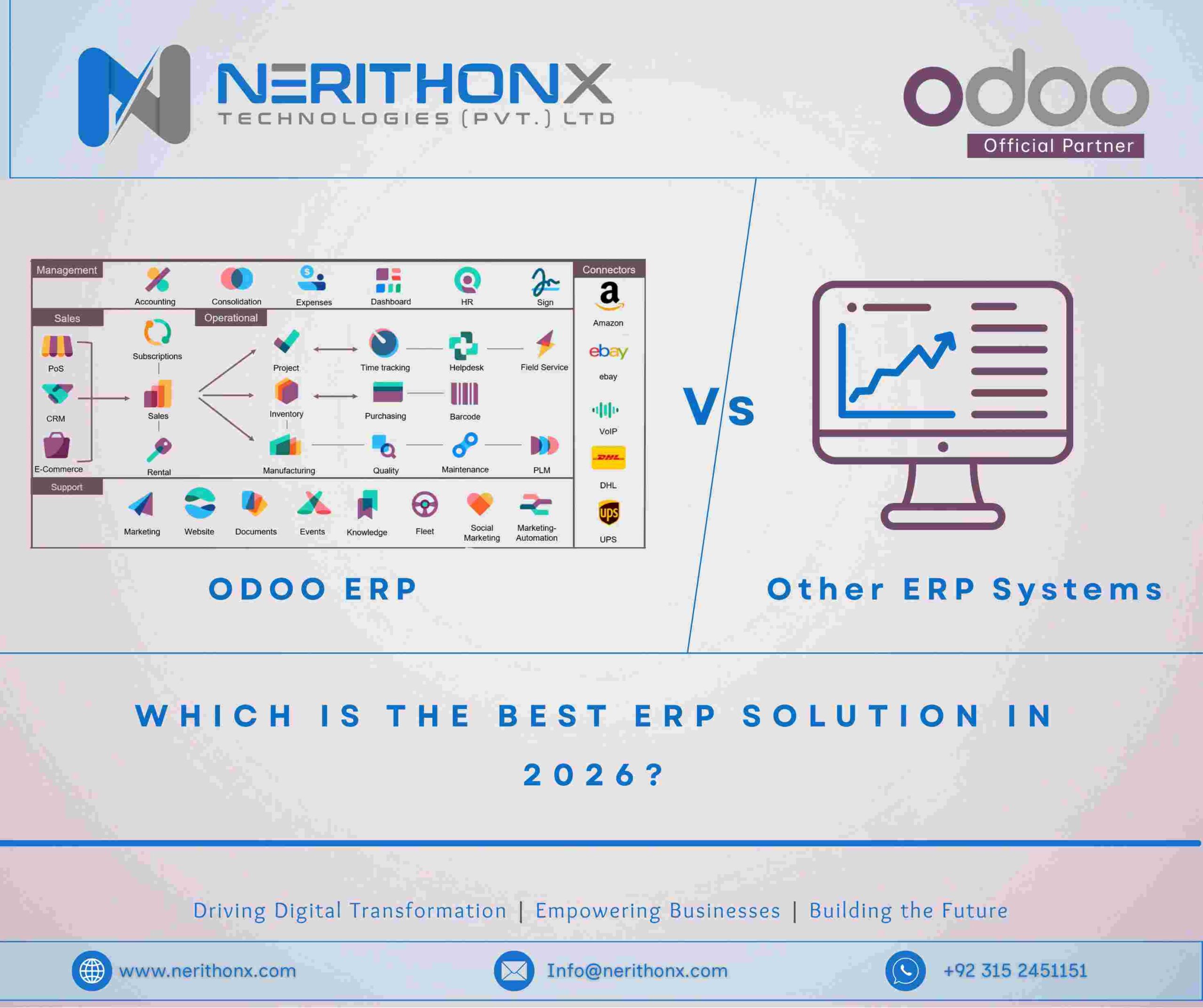
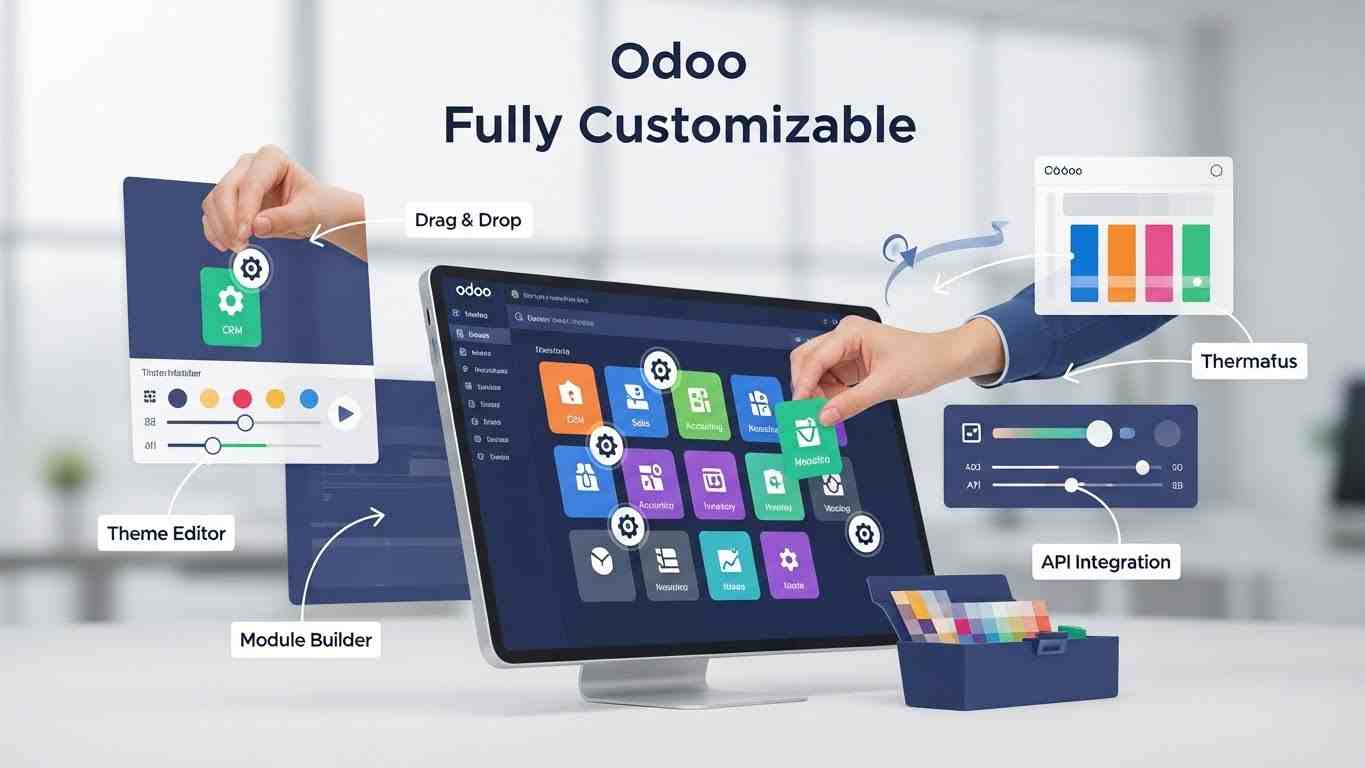
Odoo ERP is a complete business management system designed to help companies manage all their daily operations in one place. Instead of using separate software for accounting, sales, inventory, and human resources, Odoo brings everything together through small applications called modules.
Each Odoo ERP module is built to handle a specific business task. Businesses can start with a few modules and add more as they grow. This flexibility makes Odoo ERP suitable for small businesses, startups, and large enterprises alike.
What Are Odoo ERP Modules?
Odoo ERP modules are individual applications inside the Odoo ERP system. Each module focuses on one business function, such as sales, accounting, inventory, or human resources. These modules work together and share data automatically.
For example, when a sale is confirmed in the Sales module, the Inventory module updates stock levels, and the Accounting module creates an invoice. This automatic connection removes manual work and reduces errors.
How Odoo Modules Work Together in One System
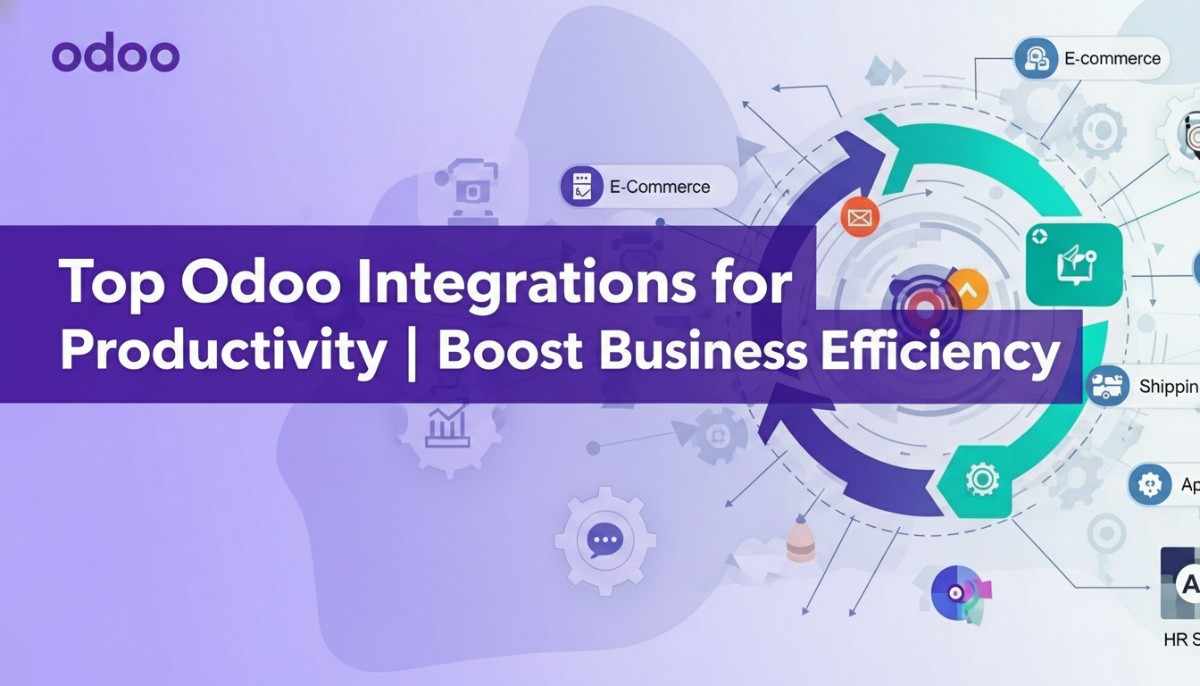
Odoo ERP works as one fully connected system using a centralized database. All modules, such as Sales, Accounting, Inventory, Purchase, and CRM, share the same real-time data. This means every department works with accurate and up-to-date information.
When an action happens in one module, it automatically updates related modules. For example, confirming a sales order updates stock levels in the Inventory module, creates an invoice in Accounting, and records customer activity in CRM. No manual data entry is needed.
This integration helps businesses save time, reduce errors, avoid duplicate work, and improve coordination between teams. With all departments working on one platform, decision-making becomes faster and overall productivity increases.
Core Business Modules in Odoo ERP
Odoo Sales Module
The Odoo Sales module helps businesses manage quotations, sales orders, and customer invoices. It allows sales teams to create professional quotes, track customer interactions, and confirm orders easily.
Sales data automatically connects with accounting and inventory, making order processing fast and accurate.
Odoo Purchase Module
The Odoo Purchase module manages supplier orders and procurement processes. Businesses can track vendor prices, create purchase orders, and manage incoming shipments.
This module helps control costs, improve supplier relationships, and avoid stock shortages.
Odoo Accounting Module
The Odoo Accounting module handles all financial activities, including invoices, payments, expenses, and financial reports. It supports automated journal entries and real-time financial tracking.
Businesses can easily generate profit and loss statements, balance sheets, and tax reports without using extra accounting software.
Odoo Inventory Module
The Odoo Inventory module manages stock, warehouses, and product movements. It supports barcode scanning, batch tracking, and real-time inventory valuation.
This module is essential for businesses dealing with physical products, helping them avoid overstocking and stockouts.
Customer & Marketing Modules in Odoo ERP
Customer and marketing modules in Odoo ERP help businesses attract leads, manage customer relationships, and convert prospects into paying customers. These modules give sales and marketing teams a complete view of customer interactions, from the first inquiry to long-term engagement. By keeping all customer data in one place, Odoo helps businesses improve communication, build trust, and increase sales performance.
Odoo CRM Module
The Odoo CRM module helps businesses manage leads, opportunities, and customer communication. Sales teams can track customer journeys from first contact to final sale.
It improves customer relationships and increases sales conversion rates.
Odoo Email Marketing Module
The Odoo Email Marketing module allows businesses to create and send marketing emails to targeted audiences. Users can track email performance, open rates, and conversions.
This module is useful for promoting products, services, and special offers.
Odoo Website Module
The Odoo Website module lets businesses build and manage websites without technical skills. It includes drag-and-drop tools, SEO settings, and content management features.
The website connects directly with sales, inventory, and CRM modules.
Operations & Manufacturing Modules in Odoo ERP
The operations and manufacturing modules in Odoo ERP help businesses plan, execute, and monitor daily work efficiently. These modules are designed to manage production activities, project execution, and employee time tracking, all within one connected system. They are especially useful for manufacturing, construction, and service-based companies.
Odoo Manufacturing Module (MRP)
The Odoo Manufacturing module helps manage production planning, bills of materials, and work orders. It tracks raw materials, production stages, and finished goods.
Manufacturers can improve efficiency and reduce production delays using this module.
Odoo Project Management Module
The Odoo Project module helps manage tasks, deadlines, and team collaboration. Businesses can track project progress, assign tasks, and monitor performance.
It is ideal for service-based businesses and construction companies.
Odoo Timesheets Module
The Odoo Timesheets module tracks employee working hours on tasks and projects. It helps measure productivity and supports accurate billing for services.
Human Resource Modules in Odoo ERP
Odoo’s Human Resource modules help businesses manage all aspects of employee management in one system. From hiring and attendance tracking to payroll processing, these modules make HR tasks easier, reduce errors, and improve efficiency for HR teams.
Odoo Employees Module
The Odoo Employees module stores employee records, contracts, and job roles. HR teams can manage attendance, leave requests, and employee information easily.
Odoo Recruitment Module
The Odoo Recruitment module helps manage job postings, applications, and interviews. It simplifies the hiring process and improves candidate tracking.
Odoo Payroll Module
The Odoo Payroll module automates salary calculations, deductions, and payslips. It ensures accurate and timely payroll processing.
Retail, Support & Maintenance Modules
Odoo’s Retail, Support, and Maintenance modules help businesses manage sales, customer service, and equipment upkeep efficiently. These modules ensure smooth operations, faster service, and reduced downtime, making them essential for retail stores, service teams, and companies with physical assets.
Odoo Point of Sale Module
The Odoo Point of Sale module supports retail stores with fast billing, product scanning, and payment processing. It works online and offline.
Odoo Helpdesk Module
The Odoo Helpdesk module manages customer support tickets and service requests. It improves response time and customer satisfaction.
Odoo Maintenance Module
The Odoo Maintenance module tracks equipment and machinery maintenance. It helps prevent breakdowns and extends asset life.
Odoo Community vs Enterprise Modules Explained
Odoo offers two main editions: Community and Enterprise, each designed for different business needs.
Odoo Community modules are free and open-source. They provide the essential tools for managing business operations, such as Sales, Inventory, Accounting, and CRM. These modules are ideal for small businesses or startups that want to test Odoo ERP without paying upfront. Since they are open–source, businesses can customize the modules themselves or with the help of developers.
Odoo Enterprise modules, on the other hand, are paid and include advanced features, automation, and official support from Odoo. Enterprise modules offer enhanced functionality such as automated workflows, advanced reporting, integrated marketing tools, mobile access, and better security features. Businesses that need more scalability, professional support, and ready-to-use advanced features usually prefer the Enterprise edition.
By understanding the differences, companies can choose the right edition based on budget, growth plans, and operational requirements. Many businesses start with the Community edition and later upgrade to Enterprise as their needs grow.
Why Businesses Choose Odoo ERP Modules
Businesses choose Odoo ERP modules because they provide a complete and connected solution for managing daily operations efficiently.
Odoo is flexible and scalable, allowing companies to start with a few modules and add more as their business grows. This makes it suitable for small startups as well as large enterprises.
It is also easy to use, with a user-friendly interface that requires minimal training. Employees can quickly navigate between modules like Sales, Inventory, and Accounting without confusion.
Odoo is cost-effective, especially compared to other ERP solutions. Businesses can start with free Community modules or select only the Enterprise modules they need, reducing unnecessary expenses.
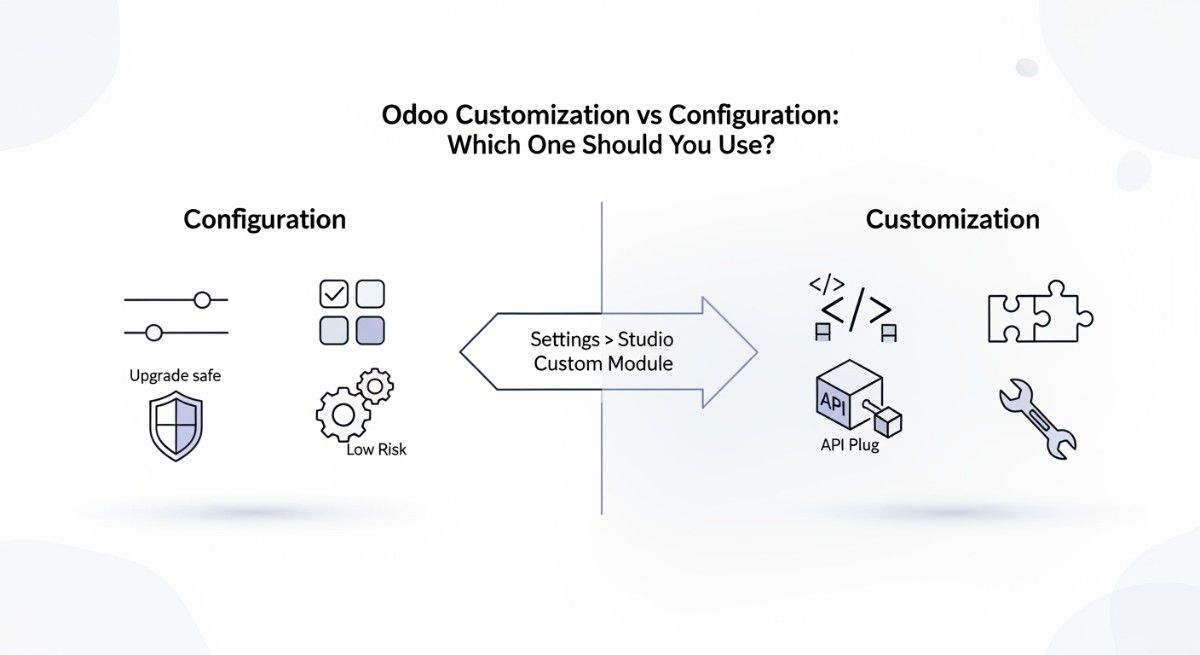
Finally, Odoo is highly customizable. Companies can tailor workflows, reports, and modules to fit their unique business processes, ensuring the system supports their specific needs rather than forcing them to adapt to the software.
Overall, these features help businesses save time, improve efficiency, and grow more effectively.
Odoo ERP modules are designed to grow with your business. Companies can start with only the essential modules, such as Sales, Inventory, and Accounting, and gradually add more as their needs increase. For example, a small business may begin with basic modules and later add Manufacturing, HR, or Project Management modules as operations expand.
How Odoo ERP Modules Support Business Growth
This modular approach allows businesses to adapt quickly to market changes, implement new processes, and scale efficiently without overhauling their entire system. Because all modules are connected through a centralized database, adding new modules is seamless—data flows automatically across departments, ensuring smooth operations.
By supporting automation, improving collaboration, and providing real-time insights, Odoo ERP modules help businesses increase productivity, reduce costs, and make informed decisions, which ultimately drives long-term growth and success.
Final Thoughts
Odoo ERP modules offer a complete, connected solution for managing all aspects of a modern business. By selecting the right combination of modules, Sales, Inventory, Accounting, HR, Manufacturing, and more, companies can streamline operations, reduce errors, and improve productivity.
At NerithonX Technologies (Pvt.) Ltd, we specialize in Odoo ERP implementation and support, helping businesses choose and customize the right modules for their unique needs. Whether you are a small startup or a growing enterprise, our team ensures a smooth deployment, personalized configuration, and ongoing support so your business can scale efficiently and achieve long-term growth.
By working with experts like NerithonX, businesses can maximize the benefits of Odoo ERP and transform the way they manage operations, improve customer satisfaction, and make smarter decisions.
FAQS
1. What are Odoo ERP modules?
Odoo ERP modules are individual applications within the Odoo system, each designed to handle a specific business function like Sales, Accounting, Inventory, HR, or Manufacturing. They work together using a centralized database to streamline operations.
2. How many modules does Odoo ERP have?
Odoo offers hundreds of modules. The exact number depends on whether you use the Community edition (basic and free) or the Enterprise edition (advanced and paid). Businesses can install only the modules they need.
3. Which Odoo module is most important for small businesses?
For small businesses, core modules like Sales, Inventory, Accounting, and CRM are usually the most important because they cover essential operations and help manage resources efficiently.
4. Can Odoo modules be customized?
Yes, Odoo modules are highly customizable. Businesses can tailor workflows, reports, and user interfaces to fit their unique requirements. Developers can also build custom modules for specialized needs.
5. Is Odoo ERP suitable for startups?
Absolutely. Odoo is flexible and scalable, allowing startups to start with only a few modules and gradually add more as the business grows. The Community edition is free, making it ideal for budget-conscious startups.
6. What is the difference between Odoo Community and Enterprise modules?
Community modules are free and open-source, offering essential features. Enterprise modules are paid, with advanced automation, additional features, official support, and better reporting tools.
7. How does Odoo improve collaboration between departments?
Odoo modules share a centralized database. When one team updates information, it’s automatically available to other departments. This improves communication, reduces errors, and saves time.
8. Can Odoo ERP handle multiple locations or warehouses?
Yes. The Inventory module supports multiple warehouses and locations, allowing businesses to track stock, manage transfers, and monitor inventory in real time across all sites.
9. Does Odoo support automated workflows?
Yes, especially in the Enterprise edition. Businesses can automate repetitive tasks like sending invoices, updating stock, generating reports, or routing approvals, which reduces manual work and increases efficiency.
10. Is Odoo suitable for manufacturing companies?
Yes. The Manufacturing (MRP) module helps manage production planning, bills of materials, work orders, and raw material tracking. It integrates with Inventory, Purchase, and Sales for a complete manufacturing workflow.