Choosing between Odoo ERP and Oracle NetSuite is not just a software decision it’s a strategic move that shapes how a business operates, scales, and controls its costs over time. Both platforms are powerful cloud ERP systems, yet they are built on fundamentally different philosophies. Odoo is designed around flexibility and modular growth, while NetSuite is structured for standardization, compliance, and enterprise-level control.
This guide explores the differences that truly influence decision-making not just surface-level features, but deeper factors such as total cost of ownership, implementation complexity, customization capabilities, and long-term adaptability. Many businesses enter this comparison thinking the answer is obvious, but the reality is more nuanced. What appears cost-effective at the beginning may evolve differently over a five- or ten-year period, depending on how the system scales with the organization.
A critical question often overlooked is whether “better value” comes from minimizing upfront costs or from building a system that reduces operational risk as complexity increases. This distinction becomes especially important as companies grow, expand into new markets, or manage more sophisticated financial structures.
As you continue reading, you will begin to notice patterns that most comparisons fail to highlight where hidden costs tend to emerge, how system architecture can either support or limit future changes, and why two businesses with similar sizes can reach completely different ERP decisions based on their priorities. By the end, the goal is not just to compare Odoo and NetSuite, but to clearly understand which system aligns with specific business realities and long-term strategy.
Understanding Odoo ERP and Oracle NetSuite
What is Odoo ERP?
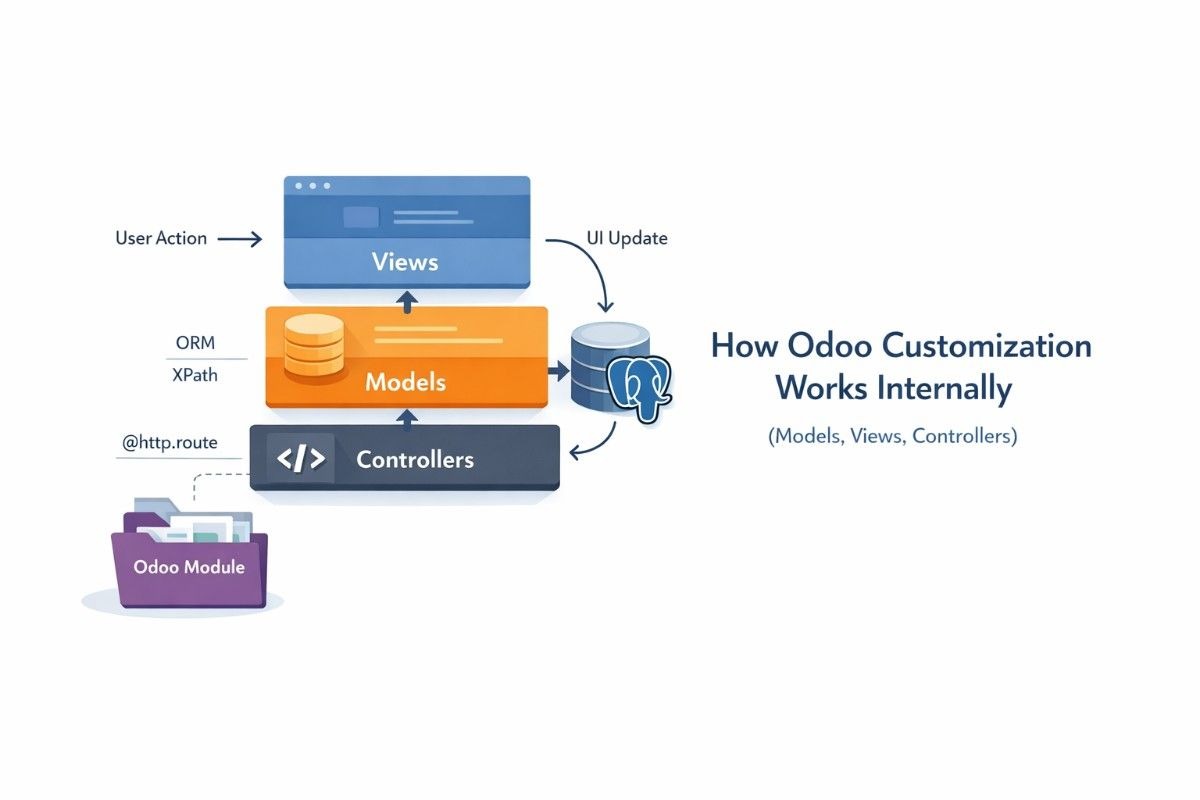
Odoo ERP is a modular, open-core business management system designed to unify multiple business functions within a single platform. Instead of forcing companies into a fixed structure, Odoo allows them to start with essential applications such as accounting or CRM and gradually expand by adding modules like inventory, manufacturing, or eCommerce as their needs grow.
At its core, Odoo is built for adaptability. Businesses can configure workflows, customize features, and integrate external tools without being locked into a rigid system. This flexibility is one of the main reasons Odoo is widely adopted by growing companies that need an ERP system capable of evolving alongside their operations. Its architecture supports multiple deployment options, including cloud and on-premise environments, giving organizations more control over how and where their data is managed.
What is Oracle NetSuite ERP?
Oracle NetSuite ERP is a fully cloud-based, enterprise-grade system designed to manage complex business operations through a unified and standardized platform. It provides tightly integrated modules for financial management, CRM, inventory, and eCommerce, all operating within a single database to ensure consistency and real-time visibility across the organization.
NetSuite is built with a strong focus on financial control and global scalability. It is particularly known for its ability to handle multi-entity operations, complex revenue recognition, and compliance requirements across different regions. As a Software-as-a-Service (SaaS) solution, it operates entirely within Oracle’s cloud infrastructure, eliminating the need for on-premise deployment while ensuring centralized system management and regular updates.
Core Difference in ERP Philosophy (Modular vs Standardized)
The fundamental difference between Odoo and NetSuite lies in how each system approaches business processes and growth.
Odoo follows a modular philosophy, where flexibility is prioritized. Businesses can shape the system around their existing workflows, adding or modifying functionality as needed. This approach supports gradual adoption and allows organizations to experiment, iterate, and adapt without significant structural limitations.
In contrast, NetSuite follows a standardized approach designed for consistency and control. It encourages businesses to align with predefined best practices, ensuring that processes remain uniform across departments and entities. This structure is particularly valuable for organizations that require strict financial governance, audit readiness, and operational consistency at scale.
Understanding this difference is critical, because it influences not only how the system is implemented, but also how easily it can adapt to change over time. In many cases, the choice between Odoo and NetSuite is less about features and more about whether a business values flexibility or standardization as it grows.
Key Differences Between Odoo and NetSuite
Architecture and Deployment Models
Odoo uses a modular and flexible architecture that supports cloud, on-premise, and hybrid deployment. This gives businesses more control over their system and data. NetSuite, on the other hand, is a fully cloud-based SaaS platform managed by Oracle, offering consistency and automatic updates but less infrastructure control.
Pricing Models and Cost Transparency
Odoo follows a transparent pricing model, usually based on per-user subscription with broad access to applications. This makes costs easier to predict. NetSuite uses a quote-based model that includes platform fees, user licenses, and additional modules, making total costs harder to estimate over time.
Customization and Flexibility
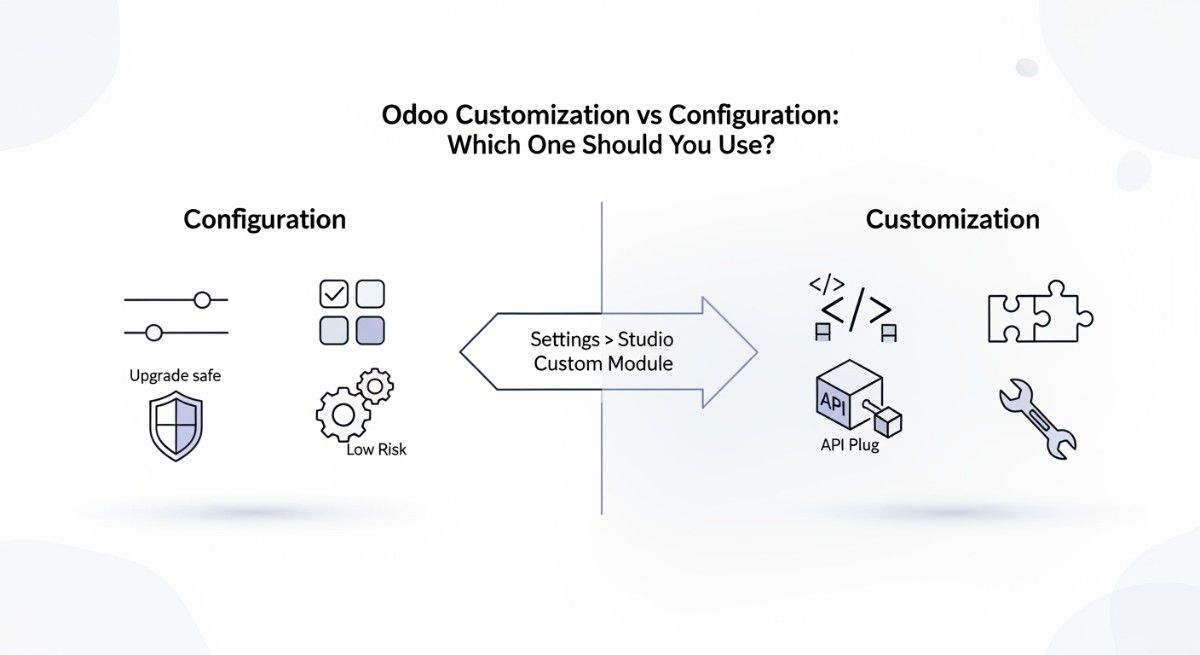
Odoo is highly flexible and allows businesses to customize workflows and features easily. Its open structure supports quick changes. NetSuite also offers customization, but it is more controlled and often requires expert involvement, making changes slower and more structured.
Implementation Approach and Complexity
Odoo typically follows a phased implementation approach, allowing businesses to start small and expand over time. This reduces risk and complexity. NetSuite implementations are more structured and can take longer, often requiring alignment with predefined processes.
User Experience and Adoption
Odoo provides a modern and user-friendly interface, which helps teams adopt the system quickly. NetSuite focuses more on functionality and control, which can require more training but supports complex business operations effectively.
Feature Comparison: Odoo vs NetSuite
Understanding features is important, but the real value comes from how these features perform in real business scenarios. While both systems cover core ERP functions, the depth, flexibility, and usability of each module can vary significantly depending on business complexity.
Financial Management Capabilities
Odoo covers core accounting needs with simple and integrated financial tools suitable for growing businesses. NetSuite stands out in advanced financial management, especially for multi-entity structures and compliance-heavy environments.
CRM and Sales Management
Odoo offers an easy-to-use CRM with quick adoption and seamless integration. NetSuite provides a more structured CRM with deeper financial linkage but requires more setup.
Inventory and Supply Chain
Odoo delivers flexible inventory management with real-time tracking and strong integration across operations. NetSuite supports large-scale supply chains with more advanced but sometimes modular-dependent features.
Manufacturing (MRP)
Odoo includes built-in MRP with strong flexibility for production workflows. NetSuite supports manufacturing but often relies on additional configurations for advanced needs.
Reporting and Analytics
Odoo provides customizable and user-friendly reporting. NetSuite offers more advanced analytics and deeper financial insights for complex decision-making.
Total Cost of Ownership (TCO) Breakdown
Total cost of ownership goes beyond initial pricing and reflects what a business actually spends over several years. It includes licensing, implementation, maintenance, and the often-overlooked hidden costs that can significantly impact long-term value.
Licensing Cost Comparison
Odoo follows a more predictable pricing structure, usually based on per-user subscriptions with access to multiple applications. This makes it easier to estimate and control costs as the business grows.
NetSuite uses a quote-based model that includes platform fees, user licenses, and additional module costs, which can make total expenses less transparent and harder to forecast.
Implementation Cost
Odoo implementations are generally more flexible and can be rolled out in phases, helping reduce upfront costs and risk.
NetSuite implementations are more structured and often require specialized consultants, which can increase initial investment depending on complexity.
Long-Term Maintenance Cost
Odoo allows ongoing adjustments and improvements with relatively lower maintenance costs, especially for businesses that need frequent changes.
NetSuite typically involves higher long-term costs due to support, upgrades, and dependency on certified experts for modifications.
Hidden Costs in ERP Systems
With Odoo, hidden costs are usually linked to customization, integrations, or hosting choices.
In NetSuite, hidden costs often come from additional modules, user expansion, contract renewals, and customization requirements, which can significantly increase total spending over time.
Use Case Analysis: Which ERP Fits Your Business?
Choosing the right ERP is less about features and more about how well the system aligns with your business size, complexity, and growth direction. The same platform can deliver very different value depending on how it fits real operational needs.
Best Fit for SMEs and Growing Businesses
Odoo is generally a strong fit for small to mid-sized and fast-growing companies that need flexibility and cost control. It allows businesses to start with essential modules and expand as operations grow, without heavy upfront investment. This makes it ideal for companies transitioning from tools like spreadsheets or basic accounting systems.
Best Fit for Enterprises and Global Operations
NetSuite is better suited for larger organizations with complex structures, especially those operating across multiple entities or countries. Its strength lies in standardized processes, advanced financial control, and the ability to manage global compliance requirements at scale.
Industry-Based Fit (Manufacturing, Retail, SaaS)
Odoo works well for industries that require operational flexibility, such as manufacturing, retail, and eCommerce, where integration between inventory, sales, and production is critical.
NetSuite is more aligned with industries that demand strong financial governance, such as SaaS, professional services, and enterprises managing subscription billing or multi-entity operations.
Customization, Integrations, and Scalability
Customization and integration define how well an ERP system can adapt as a business evolves. The ability to modify workflows, connect tools, and scale operations without major disruption plays a key role in long-term value.
Odoo Open-Source Flexibility
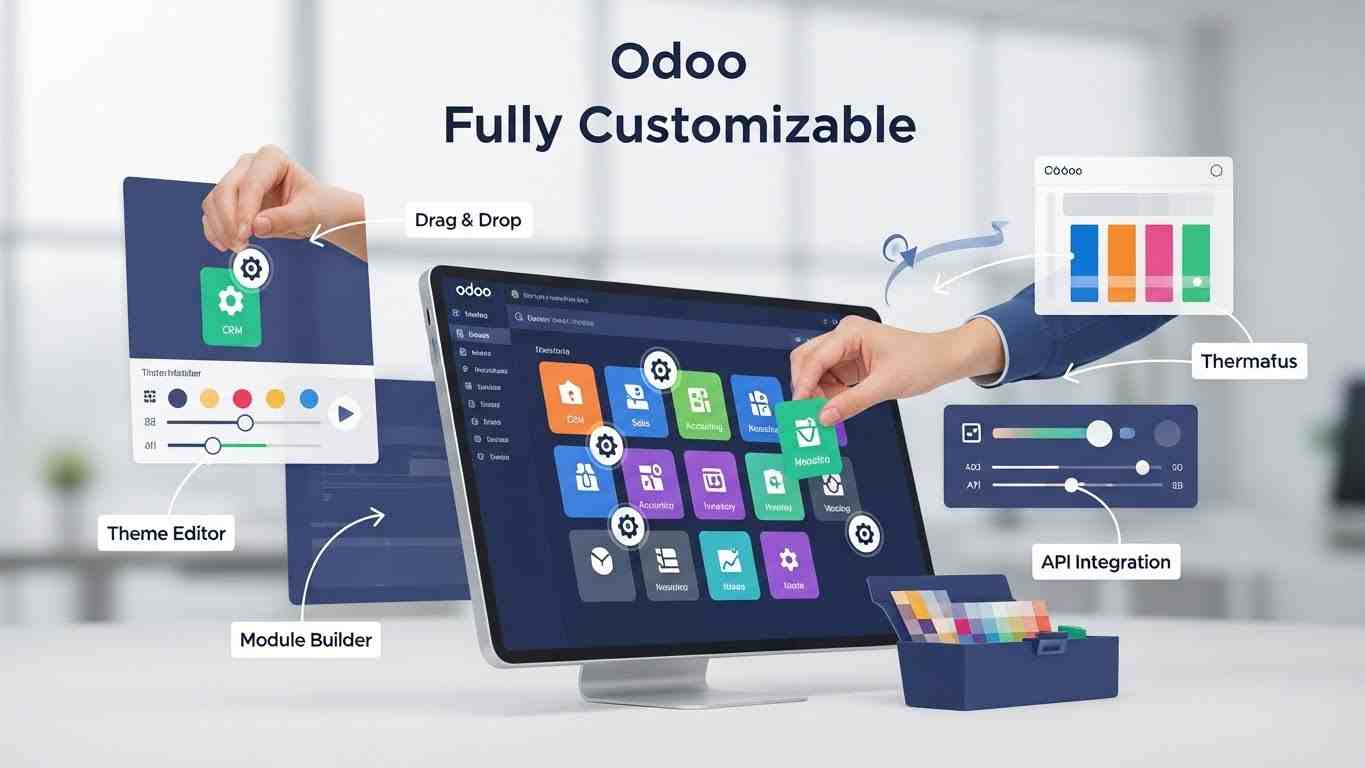
Odoo is built on an open-core architecture, which makes it highly flexible and adaptable. Businesses can customize workflows, add features, and modify modules based on their exact needs. This flexibility allows companies to evolve their system over time without being restricted by fixed structures.
NetSuite SuiteCloud Ecosystem
NetSuite offers customization through its SuiteCloud platform, which includes tools for scripting, workflows, and extensions. This approach ensures system stability and consistency, but it is more controlled and often requires specialized expertise for deeper changes.
Integration Capabilities and Limitations
Odoo provides strong integration capabilities through APIs and a large ecosystem of apps, making it easier to connect with external tools and systems.
NetSuite also supports integrations with a mature ecosystem, but implementations can be more complex and may involve higher costs, especially for specialized or regional tools.
Implementation Complexity and Project Risk
ERP implementation is one of the most critical stages in the entire journey. The level of complexity, time required, and risk involved can directly impact adoption, cost, and overall success. The approach each system takes plays a major role in how smoothly the project runs.
Odoo Implementation Approach
Odoo typically follows a phased and flexible implementation model. Businesses can start with core modules and gradually expand based on priorities. This reduces initial risk and allows teams to adapt to the system step by step, making the transition more manageable.
NetSuite Implementation Approach
NetSuite implementations are more structured and follow predefined methodologies. This approach ensures consistency and alignment with best practices, but it often requires more time, planning, and involvement from specialized consultants.
Common ERP Implementation Challenges
Regardless of the platform, common challenges include data migration issues, integration with existing systems, process alignment, and user adoption. The success of implementation often depends on how well the system matches real business workflows and how effectively teams are prepared for change.
Pros and Cons of Odoo vs NetSuite
Every ERP system comes with strengths and trade-offs. Understanding both sides helps in making a balanced and realistic decision based on business needs rather than assumptions.
Advantages of Odoo ERP
Odoo offers strong flexibility with its modular structure, allowing businesses to start small and expand over time. Its user-friendly interface supports faster adoption, and its pricing is generally more transparent and cost-effective. The ability to customize workflows and integrate different business functions into one system makes it highly adaptable for growing companies.
Limitations of Odoo ERP
Odoo may require additional customization for complex or industry-specific requirements. Support quality can vary depending on the setup, and managing advanced configurations may need technical expertise. For highly complex global operations, it may not provide the same level of built-in financial depth as enterprise-focused systems.
Advantages of NetSuite ERP
NetSuite is designed for enterprise-level performance, offering strong financial management, multi-entity consolidation, and compliance capabilities. Its standardized structure ensures consistency across operations, and its advanced reporting tools provide deeper insights for decision-making.
Limitations of NetSuite ERP
NetSuite can be more expensive, with less transparency in pricing and higher long-term costs. Customization is more controlled and often requires expert involvement. The implementation process can also be longer and more complex, which may impact flexibility for rapidly changing businesses.
Decision Framework: How to Choose the Right ERP
Choosing the right ERP system depends on aligning the platform with your business priorities, not just comparing features. The decision becomes clearer when you evaluate it through practical factors like cost, complexity, growth plans, and compliance requirements.
Based on Budget
If cost control and predictability are key priorities, Odoo is often the better fit due to its transparent pricing and lower overall investment. NetSuite requires a higher financial commitment, which may be justified for businesses that need advanced capabilities from the start.
Based on Business Complexity
For businesses with simpler or evolving operations, Odoo provides the flexibility to adapt without overcomplicating processes. NetSuite is more suitable for organizations with complex structures that require standardized workflows and tight operational control.
Based on Growth Strategy
Odoo supports gradual growth, allowing businesses to scale step by step as needs expand. NetSuite is designed for structured scaling, making it a strong choice for companies planning rapid expansion across multiple entities or regions.
Based on Compliance Needs
If compliance requirements are basic or localized, Odoo can meet most needs with proper configuration. For businesses dealing with strict regulatory standards, multi-country operations, or advanced financial reporting, NetSuite provides stronger built-in compliance capabilities.
Odoo ERP vs Oracle NetSuite — Complete Summary Table
| Category | Odoo ERP | Oracle NetSuite |
| Core Philosophy | Modular, flexible, adaptable system | Standardized, structured, enterprise control |
| Target Businesses | SMEs, startups, growing companies | Mid-market to large enterprises |
| Architecture | Open-core, customizable | Cloud-native SaaS, controlled environment |
| Deployment Options | Cloud, on-premise, hybrid | Cloud only |
| Pricing Model | Transparent, per-user, all-in-one apps | Quote-based, modular pricing, less transparent |
| Cost Predictability | High (easy to estimate) | Low (variable over time) |
| Total Cost (Long-Term) | Lower TCO, scalable cost | Higher TCO with hidden costs |
| Customization | Highly flexible, easy to modify | Controlled, requires experts |
| Ease of Changes | Fast and adaptable | Slower, structured changes |
| Implementation Approach | Phased, flexible rollout | Structured, consultant-driven |
| Implementation Time | Faster (3–9 months typical) | Longer (6–12+ months) |
| User Experience | Modern, user-friendly | Functional, requires training |
| Adoption Rate | Faster adoption | Slower due to complexity |
| Financial Management | Strong for SMEs | Advanced for complex enterprises |
| CRM & Sales | Simple, integrated, easy to use | Deep, structured, finance-linked |
| Inventory & Supply Chain | Flexible, real-time integration | Strong but may require modules |
| Manufacturing (MRP) | Built-in and flexible | Advanced but often add-on based |
| Reporting & Analytics | Customizable, simple dashboards | Advanced, enterprise-level insights |
| Scalability Approach | Gradual, modular growth | Structured, large-scale expansion |
| Integration Capability | Open APIs, large ecosystem | Strong but more complex and costly |
| Compliance Strength | Moderate, configurable | Strong, built-in enterprise compliance |
| Best Use Case | Agile, cost-focused businesses | Complex, global operations |
| Hidden Costs | Customization, integrations | Modules, licenses, renewals |
| Risk Level | Lower initial risk (phased) | Higher due to complexity |
| Ideal Decision Driver | Flexibility + cost efficiency | Control + compliance + scale |
Final Comparison Summary
When comparing Odoo ERP and Oracle NetSuite, the concept of “better value” depends less on features and more on how well each system aligns with business priorities, operational complexity, and long-term strategy. Odoo stands out for its flexibility, lower total cost of ownership, and ability to adapt as businesses grow. NetSuite, on the other hand, delivers strong value through advanced financial control, standardized processes, and enterprise-level scalability.
For growing and agile businesses, Odoo often provides a more practical and cost-efficient path, especially when flexibility and speed of implementation are critical. In contrast, organizations with complex structures, strict compliance requirements, or global operations may find NetSuite to be a more suitable choice despite its higher investment.
The key takeaway is that value is not defined by price alone—it is defined by how effectively the ERP system supports your business model over time. A system that aligns with your workflows, growth plans, and operational needs will always deliver better long-term results than one chosen purely on features or initial cost.
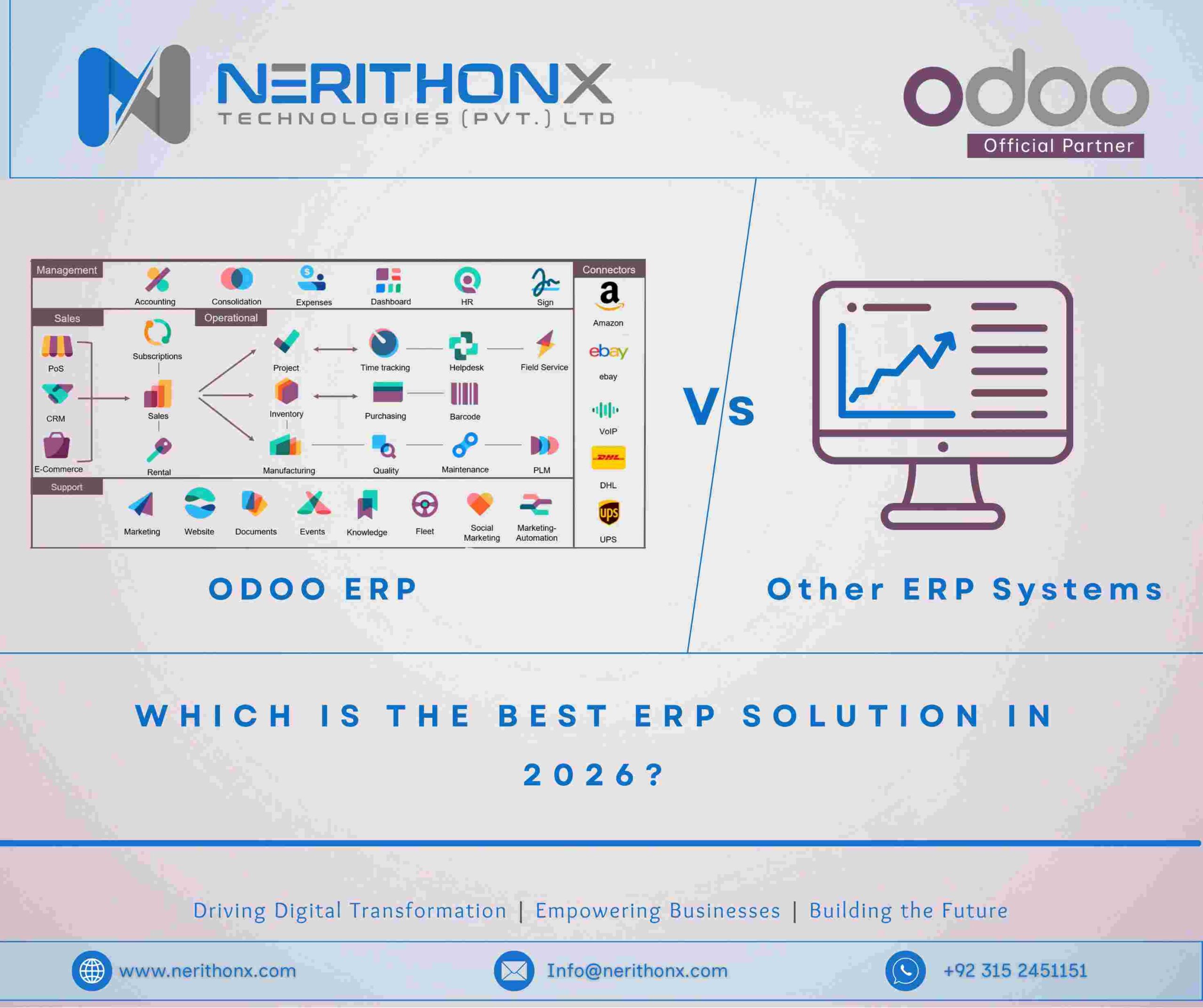
This comparison framework, presented by Nerithonx Technologies, is designed to help businesses make informed, strategic ERP decisions based on real-world factors rather than assumptions.
FAQS :
How do I decide between a flexible ERP system and a standardized one for my business?
Choose flexibility if your processes change often, and standardization if you need consistency and strict control across operations.
What factors influence ERP value beyond just pricing and features?
Long-term costs, adaptability, implementation effort, and how well the system fits your business model matter more than features alone.
How does ERP choice impact long-term business scalability and operational efficiency?
The right ERP supports smooth growth and automation, while the wrong one can create limitations and inefficiencies over time.
Which ERP is more suitable for companies transitioning from basic accounting systems?
Systems with modular and simple onboarding are generally more suitable for businesses moving from basic tools.
How do ERP systems differ in handling business process changes over time?
Some systems allow quick adjustments, while others require structured changes and external support.
What role does system architecture play in future business adaptability?
Architecture determines how easily a system can evolve, integrate, and scale with changing business needs.
How can businesses evaluate ERP systems based on real operational needs rather than assumptions?
By focusing on daily workflows, growth plans, and actual challenges instead of relying only on feature lists.
What challenges should businesses expect when switching to a new ERP platform?
Common challenges include data migration, user adoption, system integration, and process alignment.
How does ERP selection affect decision-making speed and data visibility across departments?
A well-integrated ERP improves real-time visibility and enables faster, more accurate decision-making.
Why do companies with similar sizes choose completely different ERP systems?
Because their priorities, complexity, and growth strategies are different, even if their size is similar.
How can Nerithonx Technologies help businesses evaluate the right ERP system without bias?
By providing structured comparisons, real-world insights, and decision frameworks focused on business needs rather than vendor influence.