Choosing the right ERP system is one of the most important decisions a business can make. An ERP system controls how accounting, sales, inventory, manufacturing, and operations work together. For small and mid-size businesses, this decision becomes even more critical because budget, time, and flexibility are limited.
Two names often appear when companies search for ERP software: Odoo ERP and SAP ERP. Both systems manage business operations, but they are built for very different types of organizations. This article explains the real differences between Odoo ERP and SAP in a practical way, focusing on how small and mid-size businesses actually work.
Understanding ERP Systems in Modern Business Operations
What Is Enterprise Resource Planning (ERP)?
Enterprise Resource Planning, commonly called ERP, is software that connects different business departments into one system. An ERP system stores data in a single database and allows departments to work together without manual data transfer.
In simple terms, an ERP system:
- Records financial transactions
- Tracks inventory and stock
- Manages sales and customer data
- Controls manufacturing and supply chains
- Automates daily business workflows
When an ERP system works correctly, it reduces errors, saves time, and improves decision-making.
Why ERP Selection Matters for SMEs
Small and mid-size businesses operate differently from large enterprises. They need systems that are:
- Affordable
- Easy to use
- Quick to implement
- Flexible for growth
An ERP that is too complex or too expensive can slow down operations instead of improving them. This is why comparing Odoo ERP and SAP ERP carefully is necessary.
What Is Odoo ERP and How It Supports Small and Mid-Size Businesses
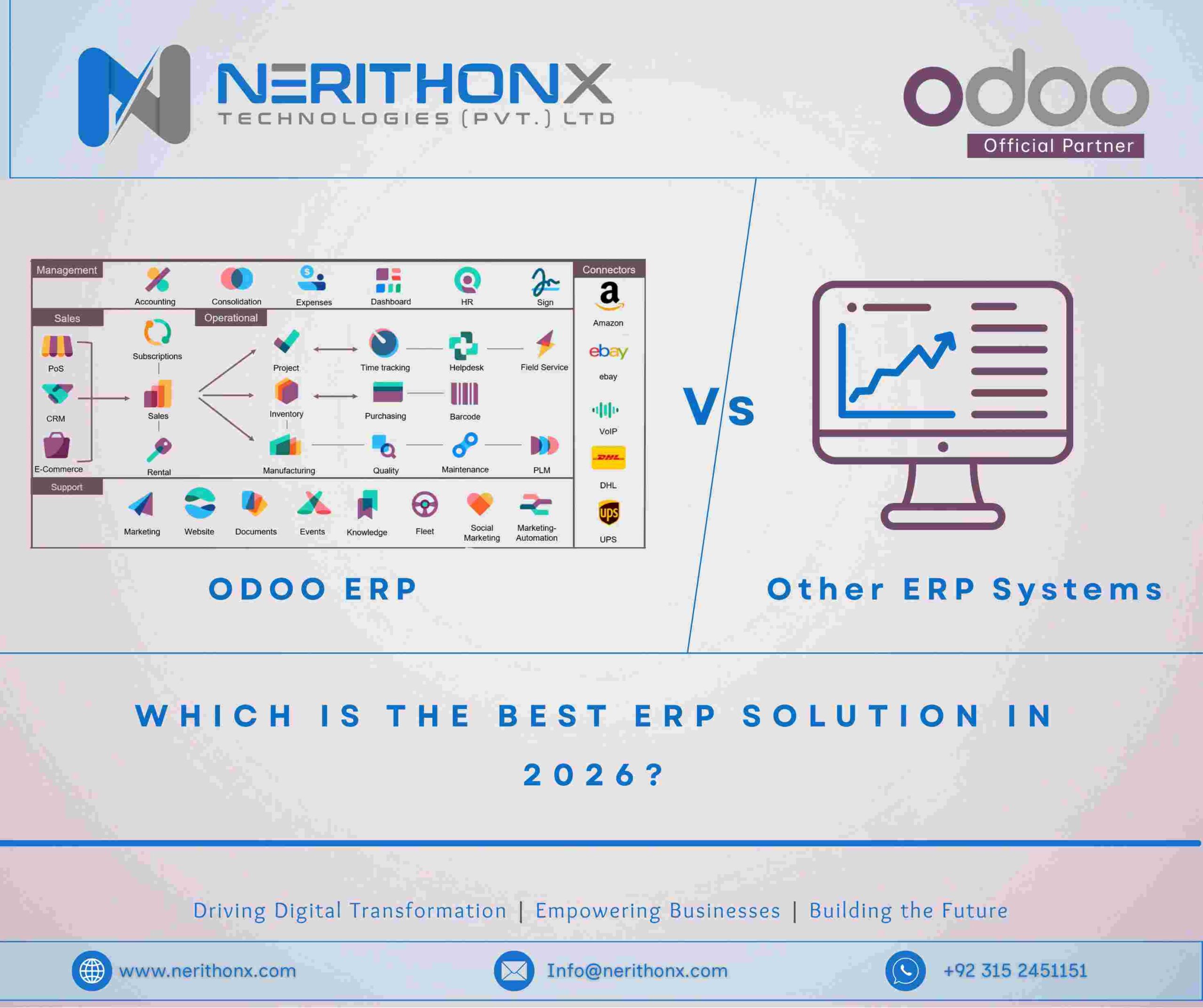
Odoo ERP is an open-source enterprise resource planning system that helps small and mid-size businesses manage accounting, sales, inventory, manufacturing, and operations from a single platform. It connects all business functions through one shared database, which improves data accuracy and operational efficiency.
Odoo ERP uses a modular architecture. Each business function is delivered as an independent module, allowing companies to install only what they need and expand later as the business grows. This approach reduces implementation complexity and cost, making Odoo practical for SMEs.
Core Odoo ERP Modules Used by SMEs
Odoo ERP provides essential modules such as Accounting, Sales, Inventory, CRM, Manufacturing, Human Resources, and Project Management. All modules share real-time data, so actions in one department automatically update related processes across the system.
Odoo Community vs Odoo Enterprise Editions
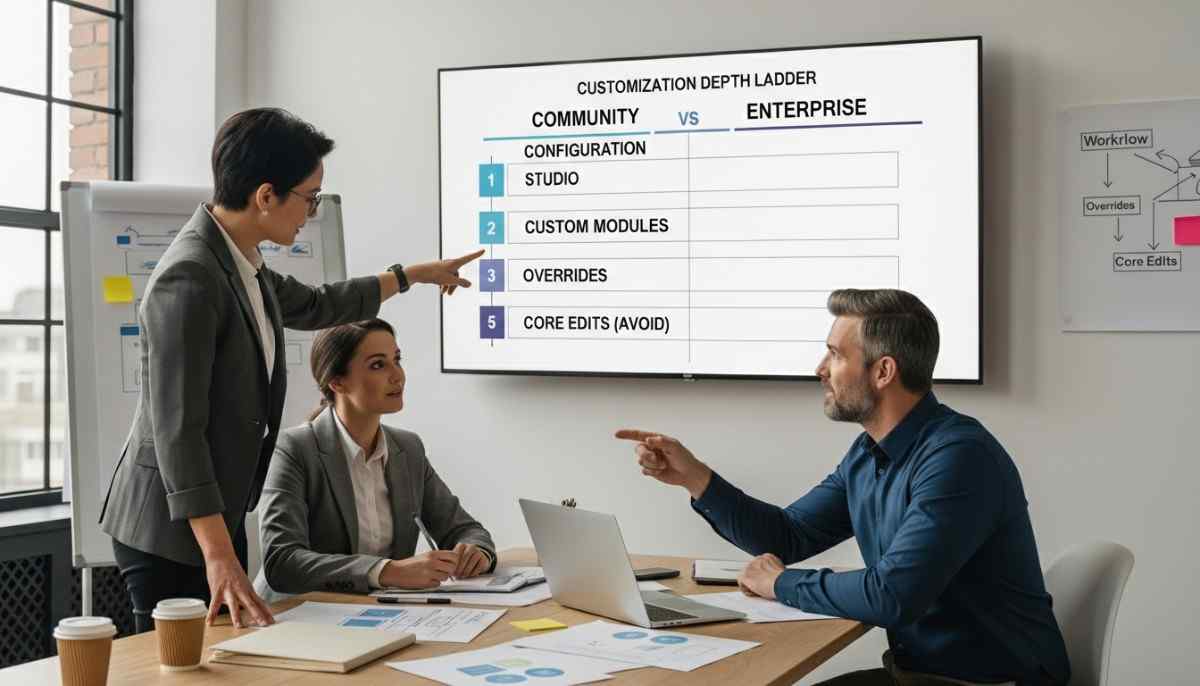
Odoo Community is a free, open-source edition that covers core ERP functions. Odoo Enterprise is a paid edition that adds advanced features, mobile apps, and official support. This dual-edition model allows businesses to start small and upgrade only when operational needs increase.
What Is SAP ERP and How It Serves Enterprise and Mid-Size Businesses
SAP ERP is an enterprise resource planning system designed to manage large-scale and complex business operations. It is widely used by multinational companies that operate across multiple regions and require strict control over finance, supply chain, and compliance.
SAP ERP emphasizes process standardization and centralized control. This approach helps large organizations maintain consistency across departments but often increases complexity for smaller teams.
SAP ERP Solutions for Enterprises and SMEs
SAP offers multiple ERP products, including SAP S/4HANA and SAP Business One. SAP S/4HANA targets large enterprises with advanced infrastructure requirements. SAP Business One is positioned for smaller companies but still follows SAP’s enterprise-first design philosophy.
As a result, SAP ERP solutions often require predefined processes and structured workflows, even for mid-size businesses.
SAP Licensing and Deployment Models
SAP ERP is typically licensed on a per-user basis and involves long-term contracts. Deployment options include on-premise and cloud environments. Both models usually require certified SAP consultants for implementation, customization, and ongoing maintenance, which increases overall cost and complexity.
Odoo ERP vs SAP: Cost and Licensing Comparison
Initial Setup and Licensing Costs
Aspect | Odoo ERP | SAP ERP |
Entry cost | Very low | Very high |
Licensing model | Free Community or per-user Enterprise subscription | Per-user licensing with long-term contracts |
Setup requirements | Basic infrastructure, flexible setup | Heavy infrastructure and certified consultants |
Customization cost | Affordable and flexible | Expensive and consultant-dependent |
For small and mid-size businesses, Odoo ERP allows a low-risk start. Companies can begin with minimal investment and expand later. SAP ERP requires a large upfront budget that includes licensing, consulting, infrastructure, and customization.
Long-Term Ownership and Maintenance Costs
Aspect | Odoo ERP | SAP ERP |
Ongoing maintenance | Predictable and manageable | High and recurring |
Developer availability | Large global developer pool | Limited to certified SAP consultants |
Infrastructure dependency | Lightweight and flexible | Specialized and costly |
Cost scalability | Grows gradually with business | Remains high regardless of size |
Odoo ERP keeps long-term costs under control because maintenance and customization can be handled by a wide range of developers worldwide. SAP ERP carries higher ongoing costs due to annual maintenance fees, expensive consultants, and specialized infrastructure.
Cost Efficiency Verdict for SMEs
From a cost and licensing perspective, Odoo ERP is significantly more cost-effective for small and mid-size businesses, both at the initial setup stage and over long-term ownership. SAP ERP is financially justified mainly for large enterprises with complex and highly standardized operations.
Implementation Complexity and Timeframe
Odoo ERP Implementation Process
Odoo ERP implementations are relatively fast and flexible. A basic Odoo system can typically go live within a few weeks. The implementation process usually includes installing required modules, configuring business workflows, migrating essential data, and training end users.
Because Odoo ERP follows a modular design, businesses can implement features gradually. New modules and improvements can be added over time without interrupting daily operations. This phased approach reduces risk and makes Odoo ERP easier to adopt for small and mid-size teams.
SAP ERP Implementation Process
SAP ERP implementations are complex and time-intensive. Projects often take several months and, in some cases, multiple years to complete. The process requires detailed business process mapping, extensive system configuration, custom development, and long user training cycles.
SAP ERP enforces standardized workflows, which means businesses must adapt their operations to the system. For small and mid-size teams, this level of complexity can slow down adoption and increase both cost and implementation risk.
Odoo ERP vs SAP: Customization, Flexibility, and Scalability Compared
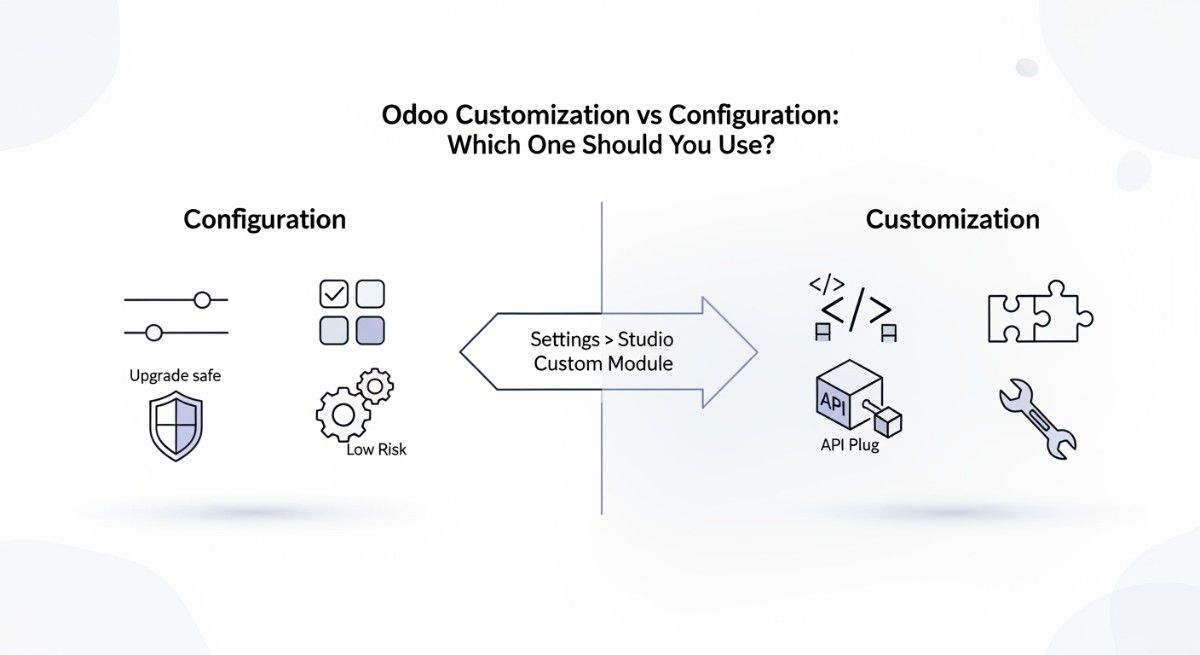
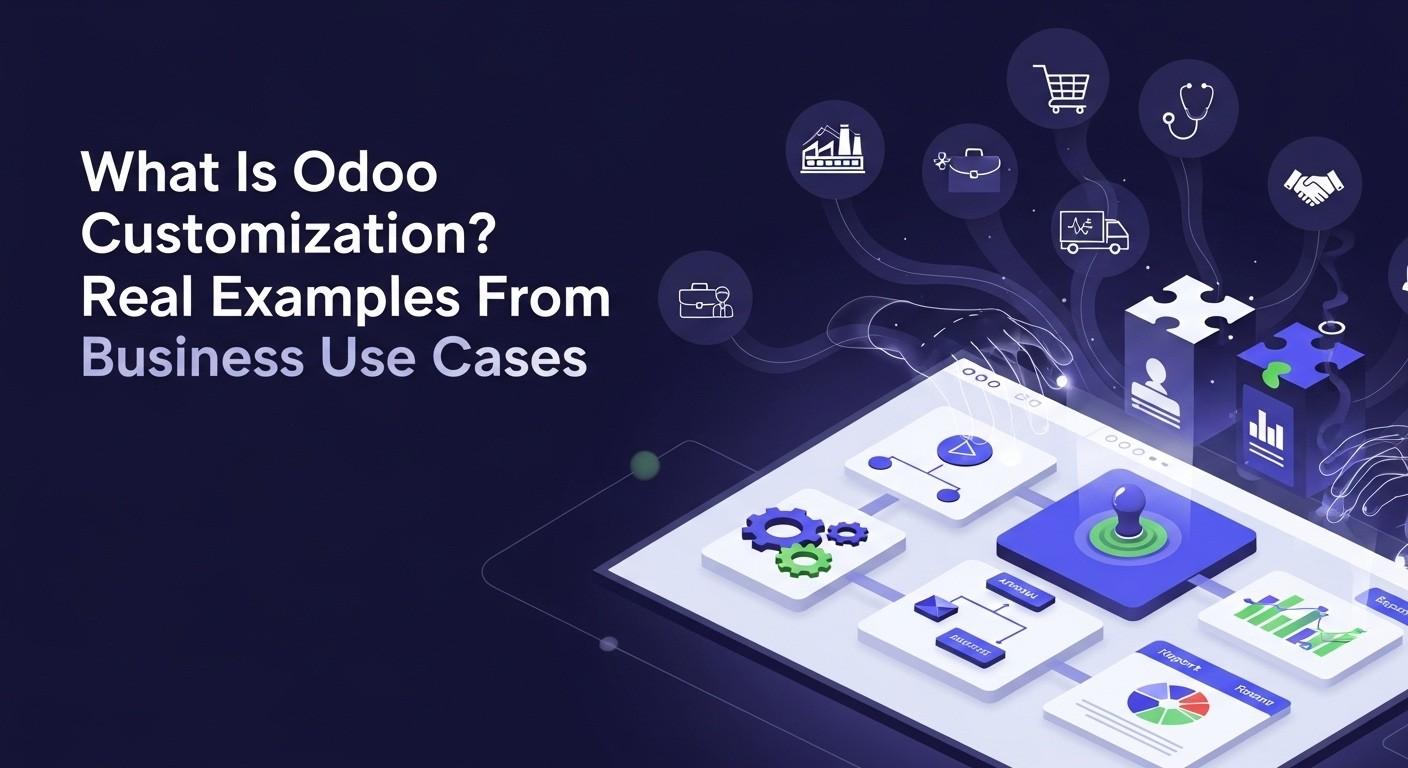
Customization Capabilities in Odoo ERP
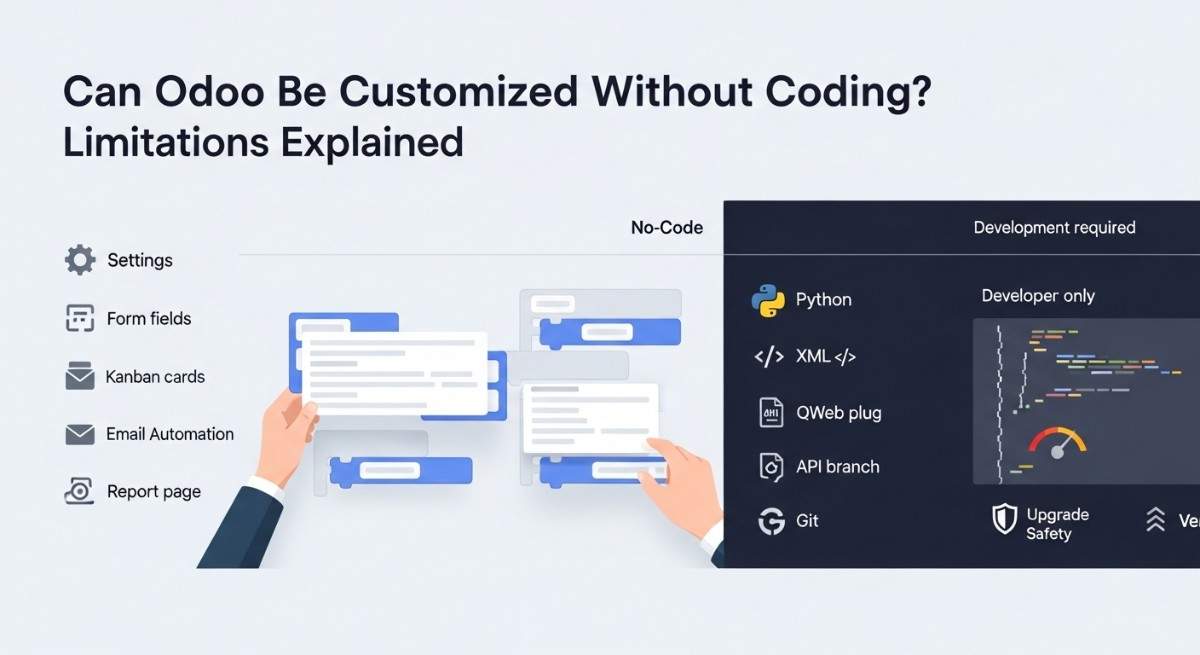
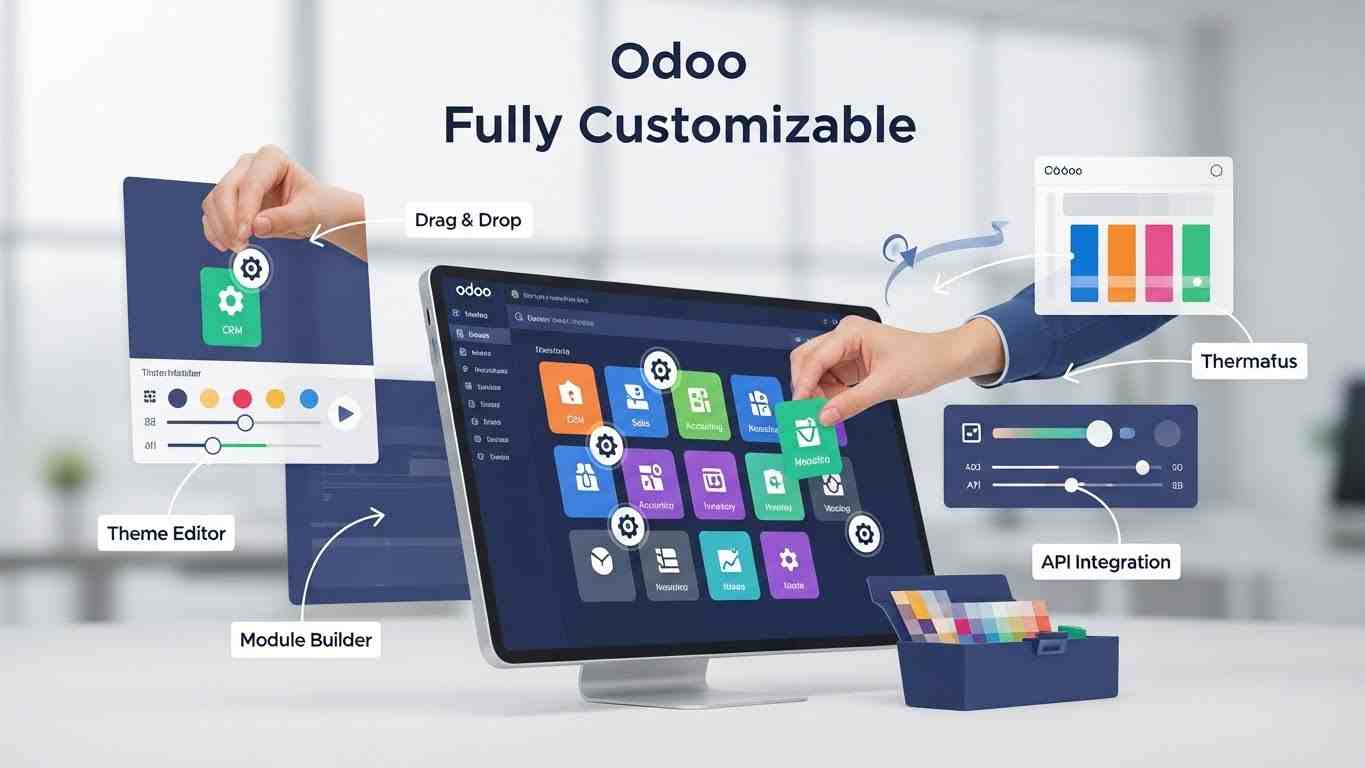
Odoo ERP is highly customizable. Developers can modify workflows, reports, and user interfaces using Python and XML.
This makes Odoo ideal for businesses with unique processes.
Customization Limitations in SAP ERP
SAP ERP allows customization, but changes must follow strict rules. Custom development is expensive and often requires certified SAP partners.
For SMEs, this limits flexibility.
Odoo ERP vs SAP: Usability, User Experience, and Learning Curve Compared
Ease of Use in Odoo ERP
Odoo ERP is designed with a modern and intuitive user interface. Most users can learn basic operations such as creating invoices, managing sales orders, or checking inventory within a short time. The system uses simple navigation and clear workflows, which makes it suitable for non-technical users.
Because Odoo ERP is easy to use, training time is shorter and onboarding costs are lower. Small and mid-size businesses can adopt the system quickly without needing extensive formal training programs.
User Training Requirements in SAP ERP
SAP ERP has a more complex interface and follows strict, standardized workflows. Users often need formal training to perform daily tasks correctly. Even simple operations may require multiple steps and system-specific knowledge.
This steep learning curve increases onboarding time and operational costs. For small and mid-size teams, the usability complexity of SAP ERP can slow adoption and reduce productivity during the initial stages.
Odoo ERP vs SAP: Integration, Automation, and Technology Stack Compared
Odoo ERP Technology Stack and Integration Capabilities
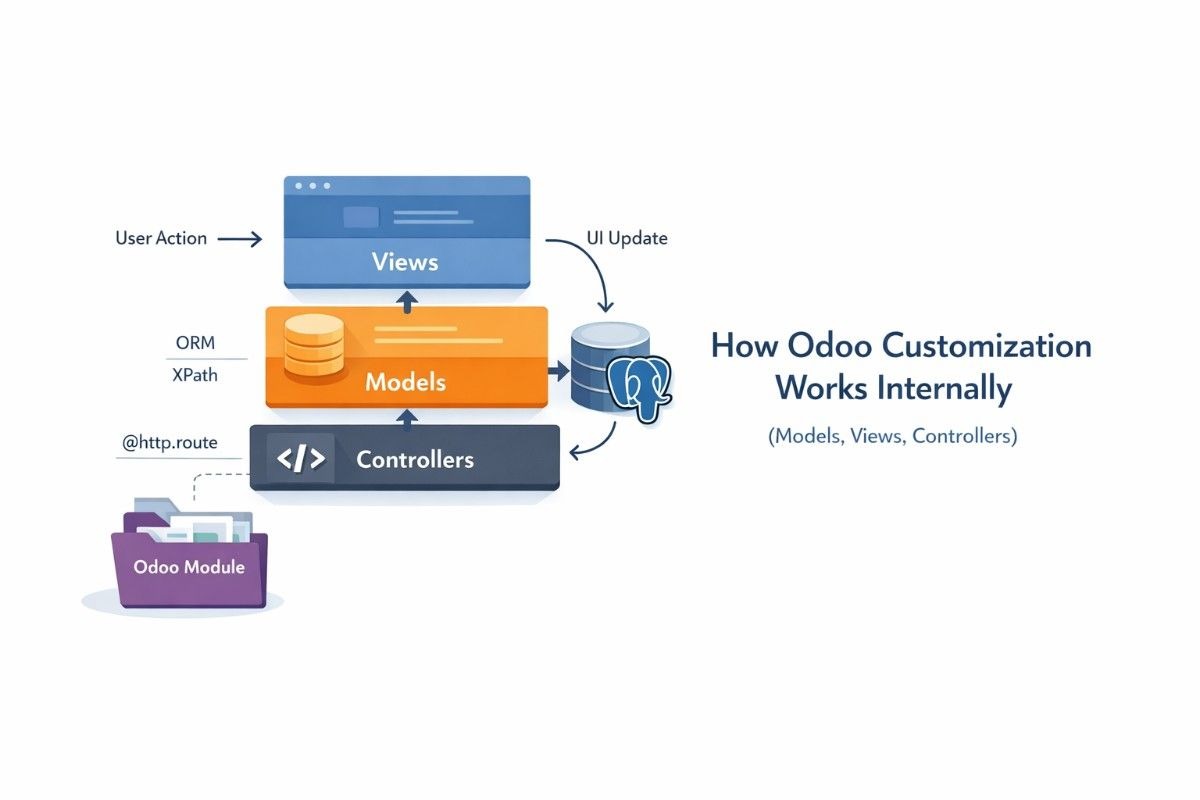
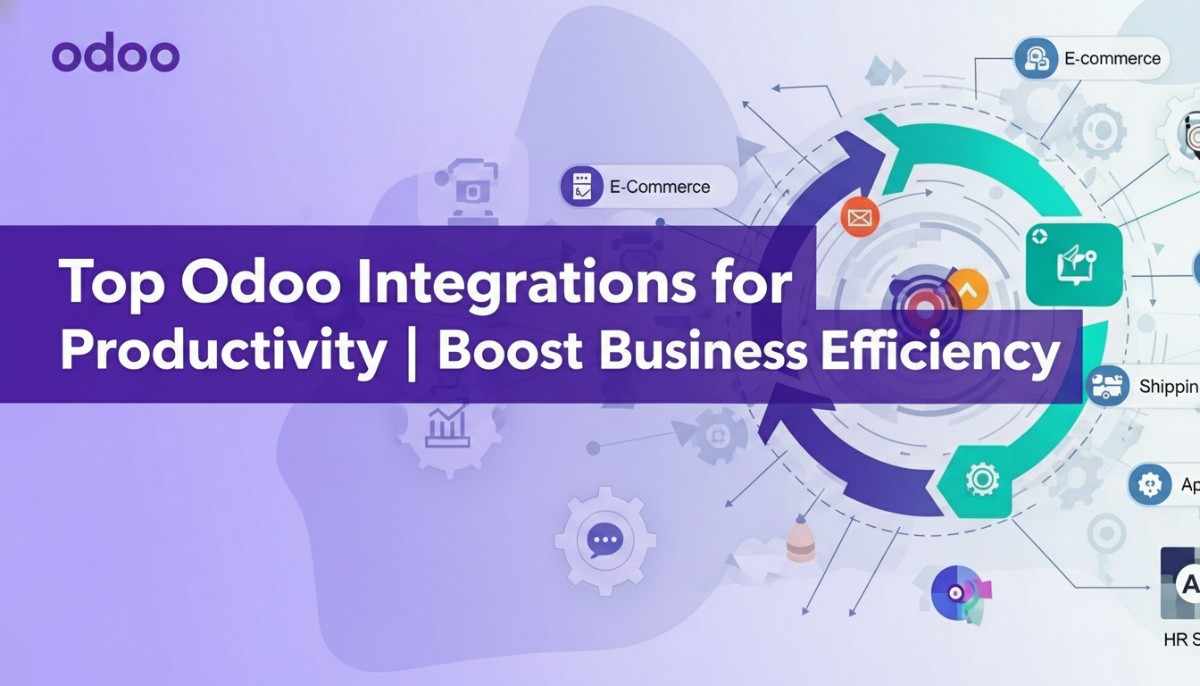
Odoo ERP is built on modern and widely adopted technologies such as Python, PostgreSQL, and REST APIs. This open technology stack makes Odoo ERP flexible and easy to integrate with third-party systems. Businesses can connect Odoo ERP with payment gateways, eCommerce platforms, shipping services, CRM tools, and marketing applications without heavy customization.
Odoo ERP also supports workflow automation across modules. Actions such as confirming a sales order, updating inventory, and generating invoices can be automated, which reduces manual work and improves operational efficiency. This flexibility makes Odoo ERP well suited for small and mid-size businesses that rely on multiple external tools.
SAP ERP Technology Ecosystem and Integration Approach
SAP ERP is built on proprietary technologies and specialized databases. It offers powerful integration capabilities within the SAP ecosystem, especially for large enterprises using multiple SAP products. However, integrating SAP ERP with external third-party systems often requires complex middleware and certified SAP consultants.
While SAP ERP supports advanced automation, configuration and maintenance are resource-intensive. For small and mid-size businesses, the complexity and cost of SAP integrations can limit agility and slow down system expansion.
Which ERP Is Better for Small and Mid-Size Businesses: Odoo ERP or SAP?
When Odoo ERP Is the Better Choice
Odoo ERP is the better choice for small and mid-size businesses that need flexibility, affordability, and faster implementation. It works well when budgets are limited, quick deployment is required, and business processes are not fully standardized. Odoo ERP also fits companies that plan gradual growth and want to add new features over time without replacing the entire system.
When SAP ERP Makes Sense
SAP ERP makes sense for organizations that operate at a global scale and require strict process standardization across multiple locations. It is suitable when workflows must follow predefined rules and compliance requirements are complex. SAP ERP is generally chosen when budget is not a major constraint and long implementation timelines are acceptable.
In most SME scenarios, this level of complexity is unnecessary and increases operational overhead.
Final Verdict: Odoo ERP vs SAP for SMEs
For small and mid-size businesses, Odoo ERP offers a practical, flexible, and affordable solution. It adapts to business needs instead of forcing businesses to adapt to the software.
SAP ERP remains a powerful system for large enterprises but often exceeds the needs and budgets of SMEs.
In most real-world SME scenarios, Odoo ERP provides better value, faster results, and greater flexibility than SAP ERP.
FAQS :
Does Nerithonx provide Odoo services?
Yes. Nerithonx offers professional Odoo implementation, customization, integration, training, and support services. They help businesses set up Odoo ERP modules such as Accounting, Inventory, Sales, CRM, and Manufacturing based on specific needs.
Can I use Odoo in Pakistan?
Yes. Odoo ERP works anywhere internet access is available, including Pakistan. You can deploy Odoo on the cloud or on local servers. Many Pakistani businesses use Odoo for accounting, sales, inventory, HR, and operations.
How much does Odoo charge per month?
Odoo pricing varies based on edition and users.
- Odoo Community is free (open-source).
- Odoo Enterprise has a monthly per-user subscription plus optional hosting costs.
Final prices depend on the number of users, modules, hosting choice, and service provider.
Which is better, Odoo or SAP?
There is no one-size-fits-all answer.
For small and mid-size businesses, Odoo ERP is usually better because it is flexible, modular, and low cost.
For large, global enterprises with complex standardized processes and strict compliance needs, SAP ERP may be more suitable.
Which language is Odoo built with?
Odoo ERP is built primarily using Python for the backend and JavaScript for the frontend.
Database operations run on PostgreSQL.
This tech stack makes Odoo flexible and developer-friendly.
Is Odoo a good ERP system?
Yes. Odoo is a strong ERP system that helps businesses manage finance, sales, inventory, HR, manufacturing, and more from a single platform. It is especially praised for flexibility, modular design, and affordability.
Do big companies use Odoo?
Yes. Many large organizations use Odoo ERP for specific business units or full operations. Odoo’s modularity and open architecture allow it to scale from small teams to larger enterprises.
Is Odoo 100% free?
Odoo has a free open-source edition (Odoo Community), which covers core ERP functions.
However, the Odoo Enterprise edition is paid and includes additional advanced features, official support, mobile apps, and upgrades.
Is Odoo a CRM or ERP?
Odoo is an ERP system that includes built-in CRM.
The CRM module in Odoo is part of the larger ERP platform, and it works seamlessly with accounting, sales, inventory, and other business modules.
Which ERP is most in demand?
Demand varies by region and business size, but commonly used ERP systems include:
- Odoo ERP – popular with SMEs due to low cost and flexibility
- SAP ERP – widely used by large enterprises
- Microsoft Dynamics 365 – known for Microsoft ecosystem integration
- Oracle ERP Cloud – strong enterprise and global reach
Demand depends on industry, company size, and specific business needs.